
Black Friday SEO 2026: What to Do, What to Avoid & When to Start
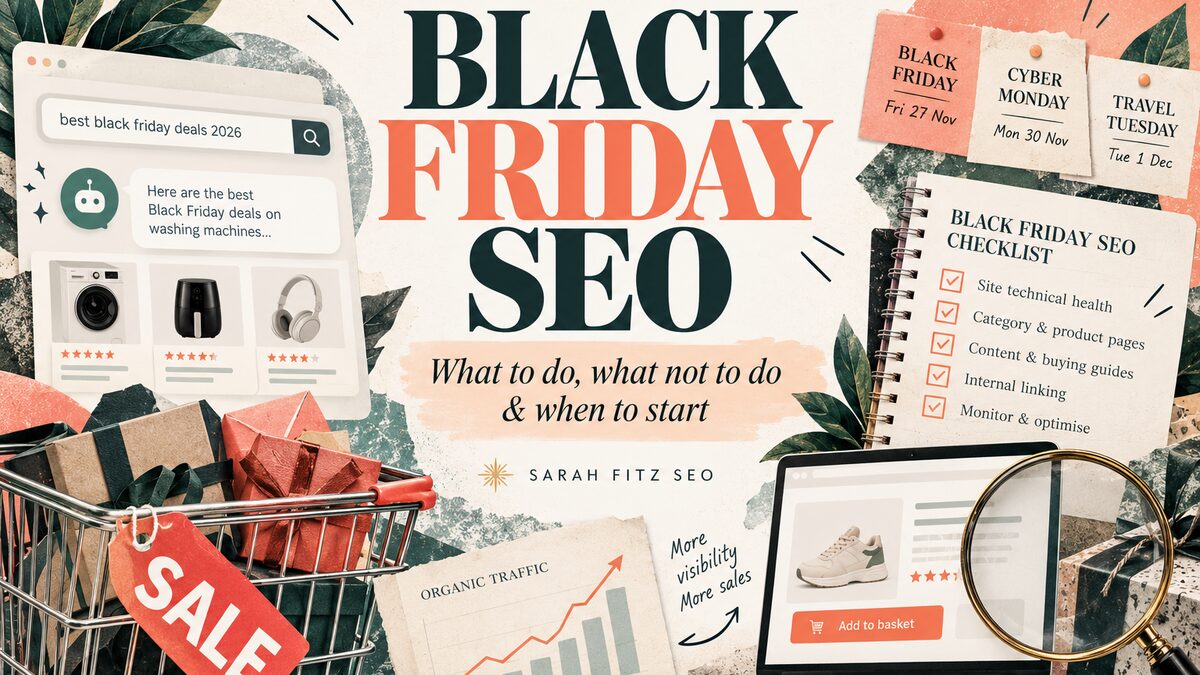
Cover images are made with AI, because this is a one woman business and I am not an illustrator. Every word underneath them is written by a human SEO with over a decade of experience.
It's Black Friday.
The homepage is covered in enormous SALE banners. The email team has just sent its biggest campaign of the year. Paid search is spending money at an alarming rate.
Meanwhile, the Black Friday landing page is nowhere to be found on Google.
Your best-selling product is out of stock. The social team is promoting a discount that expired yesterday. And somebody has just asked whether SEO can "quickly get us to number one".
Lovely.
Here's the uncomfortable truth: Black Friday SEO isn't a one-day job. Shoppers start researching weeks before they buy. They compare prices, read reviews, watch creators unbox things and, increasingly, ask AI assistants which product they should even be looking at. By the time the sale starts, a lot of decisions have already been made.
So a good Black Friday SEO strategy isn't really about ranking for "deals". It's about anticipating demand, preparing the right pages early, understanding how people actually shop, getting your teams pointing in the same direction and making sure organic visibility turns into revenue.
This is the practical version, with examples, the mistakes I see every single year and a free checklist at the end. I've also asked AI advisor and consumer tech specialist Kate Minogue to explain how AI assistants are changing the way people shop, which you'll find in the AI search section.
First, let's get our shopping days straight
Three names, five days and an awful lot of email subject lines. Tap or hover each date for the short version.
The 2026 dates
The day after US Thanksgiving. It started as a US shopping event and has grown into an international promotional period across ecommerce, electronics, fashion, homeware, beauty and plenty more.
The Monday after Black Friday, traditionally associated with online discounts. Many retailers now simply run one continuous offer across the whole weekend.
The day after Cyber Monday, focused on offers for flights, accommodation, holiday packages and travel experiences.
These are not automatically three separate SEO strategies.
A retailer doesn't need three nearly identical pages just because the marketing calendar has three different names for the same sale. If the offers, products and search intent genuinely differ, separate pages can make sense. A travel brand with distinctive Travel Tuesday deals and real search demand for them, for example, probably deserves its own page.
If everything is essentially one long sale, your SEO should reflect that.
Hypothetical example: a homeware retailer publishes /black-friday, /cyber-monday, /cyber-weekend and /black-friday-week, all showing the same 20% off the same cushions. None of them builds any real authority, internal links are split four ways and Google has to guess which one matters. One strong, permanent page would have done the job better than all four combined.
What about Travel Tuesday SEO?
Travel works differently from retail. Hypothetical example: a travel company is promoting selected winter city breaks and summer family holidays. Its Travel Tuesday SEO might include:
- A dedicated Travel Tuesday landing page, but only if there is genuine search demand and a distinct offer to put on it.
- Optimised destination pages for the places actually being promoted.
- Existing travel guides that help people research those destinations, linked to the relevant offers.
- Accurate dates, availability, booking conditions and what is (and isn't) included.
Generic "Travel Tuesday deals" traffic tends to be broad and bargain-hunting. Qualified searches for a specific destination or type of holiday usually come from people much closer to booking, which is where the revenue is. Someone dreaming about two weeks in Japan and someone hunting for a last-minute weekend in Paris aren't necessarily looking for the same thing. Your landing pages shouldn't pretend they are.
Before you plan this year's Black Friday, find out what actually worked last year
Before anyone starts designing new banners, creating landing pages or announcing that we simply MUST rank for "Black Friday deals", I'd like to know what happened last year.
Pull together Google Search Console, GA4, your ecommerce platform's sales data and whatever internal reporting the business already trusts. Then split the review into two honest questions.
What performed well?
- Impressions and clicks. Which queries and pages gained visibility during the promotional period, and when did that start?
- Top organic landing pages. Where did organic visitors actually land?
- Branded versus non-branded demand. Were people searching for you, or for the thing you sell?
- Organic revenue and transactions. What did that traffic generate?
- Conversion rate and average order value. Which pages turned visits into baskets, and how big were they?
- Best categories and products. Where did the money really come from?
- Timing. When did interest begin climbing, and when did purchases follow?
Watch out for the obvious trap: the highest-traffic page isn't necessarily the most valuable one. A gift guide that pulled in thousands of visits and almost no sales is interesting. A small category page that quietly made a fortune is more interesting.
What didn't perform?
- Pages with strong visibility but a poor click-through rate (your title and description weren't doing their job).
- High-traffic pages with weak conversion rates.
- Products that went out of stock mid-campaign.
- Pages that lost visibility compared with the year before.
- Important pages with barely any internal links.
- Technical issues: slow pages, broken filters, accidental noindex tags.
- Mobile and checkout problems.
- Promotions that simply didn't land.
Hypothetical scenario: the skincare sell-out
- 1A beauty retailer celebrates a 45% increase in organic traffic to its skincare category.
- 2Unfortunately, many of the promoted products sold out on Friday morning.
- 3Shoppers arrive, discover the products are unavailable and leave.
- 4SEO captured the demand. The business failed to convert it.
That's the difference between a search visibility problem and an inventory or customer experience problem. If you only look at traffic, you'll "fix" the wrong thing next year. The SEO wasn't broken. The stock planning was.
From there, the approach is simple: Repeat. Improve. Retire.
Repeat.
Activities, pages and campaigns that generated meaningful commercial results.
e.g. the category page that drove organic revenue at a healthy conversion rate.
Improve.
Pages and campaigns with promising demand but weak click-through, conversion, stock availability or customer experience.
e.g. the gift guide with thousands of visits and a title that nobody clicked.
Retire.
Activity that consistently underperformed or never had a realistic commercial opportunity.
e.g. the page somebody insists on every year, despite it never selling anything.
One more thing. Compare equivalent promotional periods, not identical calendar dates. Black Friday moves every year, so 27 November 2025 versus 27 November 2026 compares a sale day with the day before a sale. More on that in the reporting section.
What do people actually want to buy this year?
Last year's results are useful, but demand changes. Last year's bestseller might be this year's "oh, everyone already has one". Use a mix of sources:
- Google Search Console. Look for growing product queries, rising impressions and categories where you already have some visibility to build on.
- Google Trends. Useful for seasonal patterns, shifting product trends and when interest starts climbing. Remember it shows relative interest, not absolute search volume.
- Keyword research tools. Category terms, specific product searches, comparisons, reviews, discount queries and broader commercial searches.
- Internal site search. Your customers are literally typing what they want into a box. Read it.
- Paid search and Google Shopping. High-converting queries and shifts in commercial demand, with real revenue attached.
- Merchandising and sales. Availability, margins and promotional priorities. The best keyword in the world is useless for a product you'll have twelve of.
Search volume alone is not a prioritisation system. Combine demand with stock, margin, conversion history and how realistic it is for you to rank.
A quick example: not every popular product deserves your attention
Here's how that works in practice for a hypothetical electronics retailer weighing up three categories.
Illustrative example only, not real retailer data.
Coffee machines win, despite not having the biggest search demand. There's enough interest, plenty of stock, better commercial potential and existing rankings that could realistically be pushed higher before Black Friday.
Gaming consoles will attract enormous search interest, but investing heavily in a category with minimal stock and little chance of ranking in time is a poor commercial decision. Headphones sit in the middle: a smaller, focused campaign on the models you can actually supply might make sense.
Because ranking for something you can't actually sell is a fairly expensive way to feel popular.
A hypothetical washing machine shopper. Each stage needs different content, and often a different page.
1. Research
"Best washing machine for a family of four"
Buying guide: capacity, energy use, noise and reliability explained.
2. Comparison
"Bosch vs Samsung washing machines"
Honest comparison content and well-structured category filters.
3. Deal research
"Bosch washing machine Black Friday deals"
Your seasonal landing page, linking to the relevant category.
4. Purchase decision
"Bosch Series 6 best price and delivery"
A product page with accurate price, stock, delivery and returns.
A generic Black Friday landing page can't satisfy all four. It isn't supposed to.
If you're launching your Black Friday page on Friday, we've got a problem
Google needs time to discover, crawl and index a page, and indexing doesn't guarantee rankings. Google's own Black Friday and Cyber Monday guidance puts it bluntly: create the page well before the sale so Googlebot has time to find it.
As a planning target, I'd aim to have useful seasonal pages live 8 to 12 weeks before the event. That's not a Google rule or a ranking guarantee. An established site with a strong, well-linked seasonal page may need less lead time. A new site or a brand new page often needs more.
Use a permanent URL
Reuse something like /black-friday/ every year rather than creating /black-friday-2026/, /black-friday-2027/ and /black-friday-2028/. A permanent URL keeps the links it has earned, builds history year on year and gives everyone (customers, Google and your own email team) one consistent destination. Between campaigns, keep it live with useful content rather than deleting it.
What can go live before the discounts are confirmed?
- Confirmed or expected promotional dates, clearly labelled as such.
- Product category information.
- Buying guides and product comparisons.
- Shipping and returns information.
- Relevant FAQs.
- An optional "tell me when the sale starts" sign-up.
What shouldn't go live: invented prices or discounts nobody has signed off. That's not SEO, it's a customer service queue waiting to happen.
8 to 12+ weeks before
Research demand and publish genuinely useful pages.
4 to 8 weeks before
Optimise category pages, buying guides and internal links.
2 to 4 weeks before
Validate indexing, metadata, product structured data and feeds.
Final week
Confirm offers, tracking, stock, landing pages and technical readiness.
Black Friday through Travel Tuesday
Monitor performance and fix issues quickly.
After the event
Review results and keep useful pages for the next campaign.
Already starting late? Here's what I'd prioritise
If you're reading this four weeks before Black Friday, don't panic, and please don't commission 20 brand new pages in November. Focus where the effort can still pay off:
- Improve pages that already have visibility, especially your existing seasonal URL and top categories.
- Prioritise high-demand categories with real stock behind them.
- Add internal links from strong pages (homepage, main navigation, popular categories) to the pages that matter.
- Check product details, prices and availability are accurate everywhere, including feeds.
- Remove conversion obstacles: slow mobile pages, confusing filters, checkout friction.
What a Black Friday landing page actually needs
A giant SALE graphic doesn't make a good landing page. It makes a large image. A page worth ranking needs:
- A clear purpose that matches what the searcher wants.
- Relevant products and categories, not your entire catalogue.
- Accurate pricing and visible availability.
- Useful content: what's on offer, when, and how delivery and returns work.
- Internal links to and from relevant categories.
- Crawlability, indexability and a sensible canonical URL.
- Product structured data where appropriate, and accurate Google Merchant Center feeds.
- Fast, usable mobile performance.
- A checkout that works under pressure.
- Reviews and trust information people can actually find.
Picture the shopper. They've found the discounted air fryer. A newsletter pop-up appears. They close it. A cookie banner slides up. They accept it. A spinning discount wheel invites them to "try their luck". They close that too. A chat bubble asks if they need help. Yes. They need help finding the air fryer, which has now disappeared behind a sticky "free delivery" bar.
Rankings are only useful if people can actually find and buy something.
What to do, what not to do, and what to please stop doing
Black Friday SEO do's and don'ts
Do: Reuse and improve valuable seasonal URLs
Don't: Create a shiny new URL every single year
Do: Research what customers actually want
Don't: Optimise every category equally and hope
Do: Prioritise products with stock and commercial value
Don't: Chase keywords purely because the volume looks exciting
Do: Publish useful landing pages well in advance
Don't: Launch an empty, keyword-stuffed page on Thursday night
Do: Build relevant internal links
Don't: Rely on the XML sitemap to do all the work
Do: Test mobile UX and checkout
Don't: Assume rankings automatically mean sales
Do: Coordinate paid and organic priorities
Don't: Let departments compete without talking to each other
Do: Validate tracking before launch
Don't: Discover on Monday that revenue data is missing
Do: Measure revenue and conversions
Don't: Celebrate traffic without checking what it earned
Your SEO strategy can't live in a spreadsheet nobody else has opened
Black Friday is where SEO stops being an isolated channel and becomes a team sport. You can do everything right on the search side and still lose, because the problem was three desks away.
Everybody is working hard. Nobody is working together.
A scenario I suspect will feel familiar:
- Email launches its big campaign linking to last year's sale URL.
- Paid search is bidding heavily on products that are almost out of stock.
- Social is promoting an offer that merchandising changed on Tuesday.
- SEO has carefully optimised a category that isn't in the sale.
- Reporting is using a different campaign date range from everyone else.
Nobody has been lazy. Everyone is busy. Their work just isn't aligned, and the customer feels every gap.
The fix isn't glamorous: agree who shares what, and when.
Then put it all in one shared Black Friday campaign document: owners, deadlines, confirmed offers and the exact URLs every channel will use. It sounds basic. It prevents an astonishing amount of chaos. If you want more on this, I've written about how SEO makes your other marketing channels stronger.
AI is changing how people shop. Black Friday won't be immune.
There's another part of the shopping journey that retailers need to pay attention to, and it's changing pretty quickly.
AI assistants are increasingly becoming part of how consumers research products, compare options and decide where to spend their money.
But what does that actually mean for retailers preparing for Black Friday?
I asked Kate Minogue to share her perspective on how AI is changing shopping behaviour and what businesses need to consider.
One of the biggest changes AI assistants are bringing to shopping is that consumers no longer need to start their journey with a retailer at all.
Think about buying a washing machine. Traditionally, you might visit a retailer's website, browse the options, read a few reviews and eventually settle on the model you want. Now, you could start by asking an AI assistant to recommend the best washing machine for a family of four, within a particular budget, that's reliable and energy efficient, and compare three or four models without visiting a single retailer's website.
By the time you've decided what to buy, the next question becomes where to buy it, and that's where things get particularly interesting for retailers. If several businesses sell the same product, price will obviously matter, especially around Black Friday, but it's not the only consideration. Product availability, delivery options, customer reviews, returns policies and overall reputation can all influence the decision, which means the retailer that wins the sale might not be the one that would traditionally have captured the shopper at the start of their research.
"If your prospect is asking the AI assistant where to buy then you need to have 'why you' repeated everywhere in the kind of language they are asking."
In practice, that means making your competitive advantages clear wherever customers (and the AI tools summarising them) are likely to look: product and category pages, buying guides and comparison content, customer reviews and testimonials, brand messaging and FAQs, and relevant third-party mentions and recommendations. This isn't about repeating identical keywords everywhere. It's about making the reasons to choose you easy to find, consistent and written in the same language your customers use when they ask.
Of course, this won't happen in exactly the same way across every industry. Someone buying their usual groceries, or shopping with a brand they're fiercely loyal to, may behave very differently from someone researching a new laptop, washing machine or family holiday. Higher-consideration purchases are particularly interesting because customers tend to have more questions, more comparisons to make and more reasons to seek advice before committing.
Deloitte's August 2026 study, The Human and the Agent: The State of Agentic Commerce in Europe, gives a sense of how that varies by category. Among surveyed European AI shoppers, here's where they said they'd used AI:
- Consumer electronics53%
- Fashion and apparel41%
- Travel and experiences35%
- Beauty and care33%
- Groceries27%
Source: Deloitte, The Human and the Agent: The State of Agentic Commerce in Europe (August 2026), as charted by eMarketer. Base: 7,512 surveyed European consumers aged 18 to 59 who had used AI tools while shopping. Figures show the categories in which they reported using AI, not the share of all consumers and not purchases completed with AI.
That brings us to Black Friday. Consumers are already more informed before they buy, and AI gives them another way to research products, shortlist options and check whether a deal is genuinely worth considering. For retailers, that means the work doesn't begin and end with a Black Friday landing page.
You need to make sure your products are easy to understand, your information is accurate and your business gives people a compelling reason to choose you. If somebody has already decided which product they want before they reach your website, your job is to make that final decision as easy as possible.
Ultimately, AI isn't removing the shopping journey. It's changing where parts of that journey happen, and retailers need to think about how they stay competitive at every stage of it.
"AI isn't removing the shopping journey. It's changing where parts of that journey happen."
And that's the bit I think retailers really need to pay attention to. Getting found is important, but what happens after somebody discovers your product matters just as much.
Your SEO strategy, product information, brand reputation and customer experience can't all be treated as separate things. Particularly when shoppers have more ways than ever to research their options. If you want to dig into this further, here's why your brand might not be showing up in ChatGPT.
How to report on Black Friday SEO without getting distracted by pretty graphs
A 40% traffic increase sounds lovely. What did it actually generate?
- Impressions and clicks show visibility and whether people chose you in the results.
- Organic sessions show how many visits arrived.
- Organic revenue and transactions show whether any of it mattered commercially.
- Conversion rate and average order value show how efficiently that traffic turned into money.
- Top organic landing pages show which pages did the work.
- Branded and non-branded performance separates existing demand for you from new customers finding you.
- Category performance shows where to invest next year.
- AI search visibility and referrals, where measurable, show early signs of the shifting journey.
Keep your sources straight. Google Search Console tells you what happened in Google's results (impressions, clicks, queries). GA4 tells you what happened on your site (sessions, conversions, revenue). They measure different things and will never match perfectly, so don't spend a week trying.
Google Search Console also has dedicated generative AI performance reports, providing insights into how your pages appear in features such as AI Overviews and AI Mode. Google completed the worldwide rollout in August 2026, although the amount of data available will depend on your website's visibility in those features. Separately, GA4 and other analytics tools can help identify referral sessions from AI assistants and the conversions attributed to them. But let's be honest: plenty of AI-assisted journeys end with someone typing your brand name or walking into a shop, and no report captures that neatly.
Compare equivalent promotional periods
For the full Black Friday to Travel Tuesday period, compare like with like:
- 2025: Thursday 27 November to Tuesday 2 December.
- 2026: Thursday 26 November to Tuesday 1 December.
Use the same event window and consistent attribution settings, rather than automatically comparing identical calendar dates.
Two reports, one useful
Both examples are hypothetical, not client results.
- Report A: "Organic traffic increased 35%."
- Report B: "Organic traffic increased 12%, while organic revenue grew 29%. Priority electronics categories converted more efficiently, but two high-demand products sold out early, limiting further sales."
Report B is less exciting to screenshot and far more useful. It tells you what happened, why it mattered and what to fix next time. Aim for that: a short summary, the commercial outcome, what worked, what didn't and three clear actions. Nobody needs a 47-slide deck.
Reporting during the campaign versus after it
During the campaign, keep an eye on revenue and transactions, conversion rates, product availability, broken landing pages, checkout or mobile issues and whether campaign tracking is actually firing. Search Console data isn't real-time, so don't treat it as a live trading dashboard.
After the campaign, dig into organic clicks and impressions, organic landing-page revenue, conversion rate and average order value, branded versus non-branded and category-level performance, year-on-year changes and the lessons worth carrying into the next promotional season.
Live monitoring helps you react. Post-campaign reporting helps you learn.
Black Friday is over. Your SEO work isn't.
The sale ends, the banners disappear and everyone needs a lie-down. But before you forget everything that happened, document what worked and what didn't. Otherwise, you'll be having exactly the same meeting next October.
- Remove expired offers and inaccurate promotional copy.
- Keep useful evergreen seasonal pages live, updated for "see you next year".
- Review category and product performance.
- Analyse lost conversions and stock problems.
- Note new content opportunities from the questions customers asked.
- Record every technical issue, while people still remember them.
- Save your reporting benchmarks somewhere findable.
- Plan the improvements for next year, with owners.
Is your Black Friday SEO strategy actually ready?
Before you send another email, launch another ad or ask Google nicely to rank your sale page, let's check you've covered the essentials. Your ticks are saved on this device only.
Research and demand0/5
Landing pages and technical SEO0/6
Marketing collaboration0/5
AI search and customer experience0/5
Reporting and post-event0/5
Your ticks are saved on this device only. Sharing sends the link, not your progress. Need to plan priorities and track performance? Use the separate Excel planning worksheet in this article.
The final word
Black Friday is an enormous opportunity. It's also a stress test of how well a business understands its customers and how well its teams work together.
Good rankings won't save an unavailable product, an uncompetitive offer or a broken checkout. AI-assisted shopping adds another layer, because more of the research and comparison now happens before anyone reaches your website. SEO has to support the whole journey, not just the first click.
Do the work early, and this year's Friday morning can be a lot quieter. Fewer panicked messages, fewer missing pages and nobody asking SEO to "quickly get us to number one". Well, fewer people.
If you'd like a second pair of eyes on your seasonal plan, this is the kind of work I do with retailers through my ecommerce SEO consultancy. Get in touch and tell me what's keeping you up at night (Black Friday related or otherwise).
Frequently asked questions
- When should I start Black Friday SEO?
- Ideally, research and planning start months ahead, with useful seasonal pages live around 8 to 12 weeks before the event. That's a planning target, not a Google rule. Established pages may need less time, brand new ones often need more.
- Should I create a new Black Friday landing page every year?
- Usually not. Reuse one permanent URL, such as /black-friday/, and update it each year. It keeps the links and history it has built up and gives every channel one consistent destination.
- Is Cyber Monday SEO different from Black Friday SEO?
- Only if your offers, products and search demand are genuinely different. If it's one continuous sale, one strong page is normally better than several near-identical ones competing with each other.
- What is Travel Tuesday and how should travel brands approach it?
- Travel Tuesday is the day after Cyber Monday, focused on travel offers. Travel brands with distinctive deals and real search demand for them can justify a dedicated page, published early and linked from relevant destination pages.
- How is AI search changing Black Friday shopping?
- Some shoppers now research and compare products with AI assistants before visiting a retailer, particularly for considered purchases like electronics and travel. Retailers then need to win on accurate product information, price, stock, delivery and trust.
- Which metrics matter most when reporting Black Friday SEO?
- Organic revenue, transactions, conversion rate and average order value, alongside impressions, clicks and sessions for context. Compare equivalent promotional periods year on year, not identical calendar dates.
- What should I do if I'm starting my Black Friday SEO strategy late?
- Improve what already has visibility: your existing seasonal page, high-demand categories with stock, internal links, accurate product details and any conversion obstacles. Late October is not the time to launch twenty new pages.
Found this useful? You can buy me a coffee ☕
Need help understanding where your organic visibility stands?
Get a clear read on your search and AI performance, and the next moves worth making.
Contact me for a consultation todayKeep reading
All posts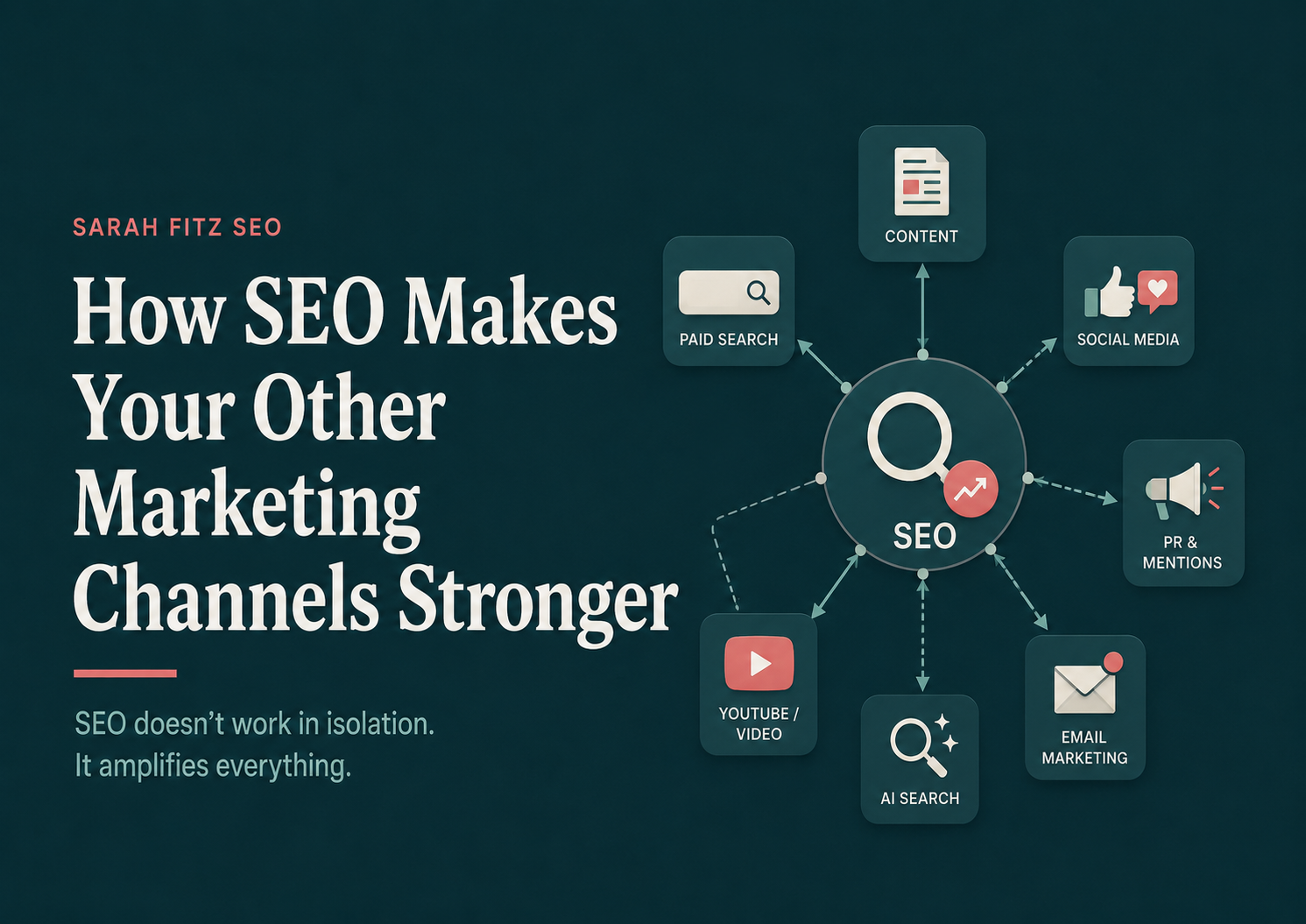 SEO Strategy
How SEO Makes Your Other Marketing Channels Stronger
SEO is not just another channel in your marketing plan. Done properly, it makes your content, paid search, social media, PR, YouTube, AI search and email marketing stronger.
Jun 18, 2026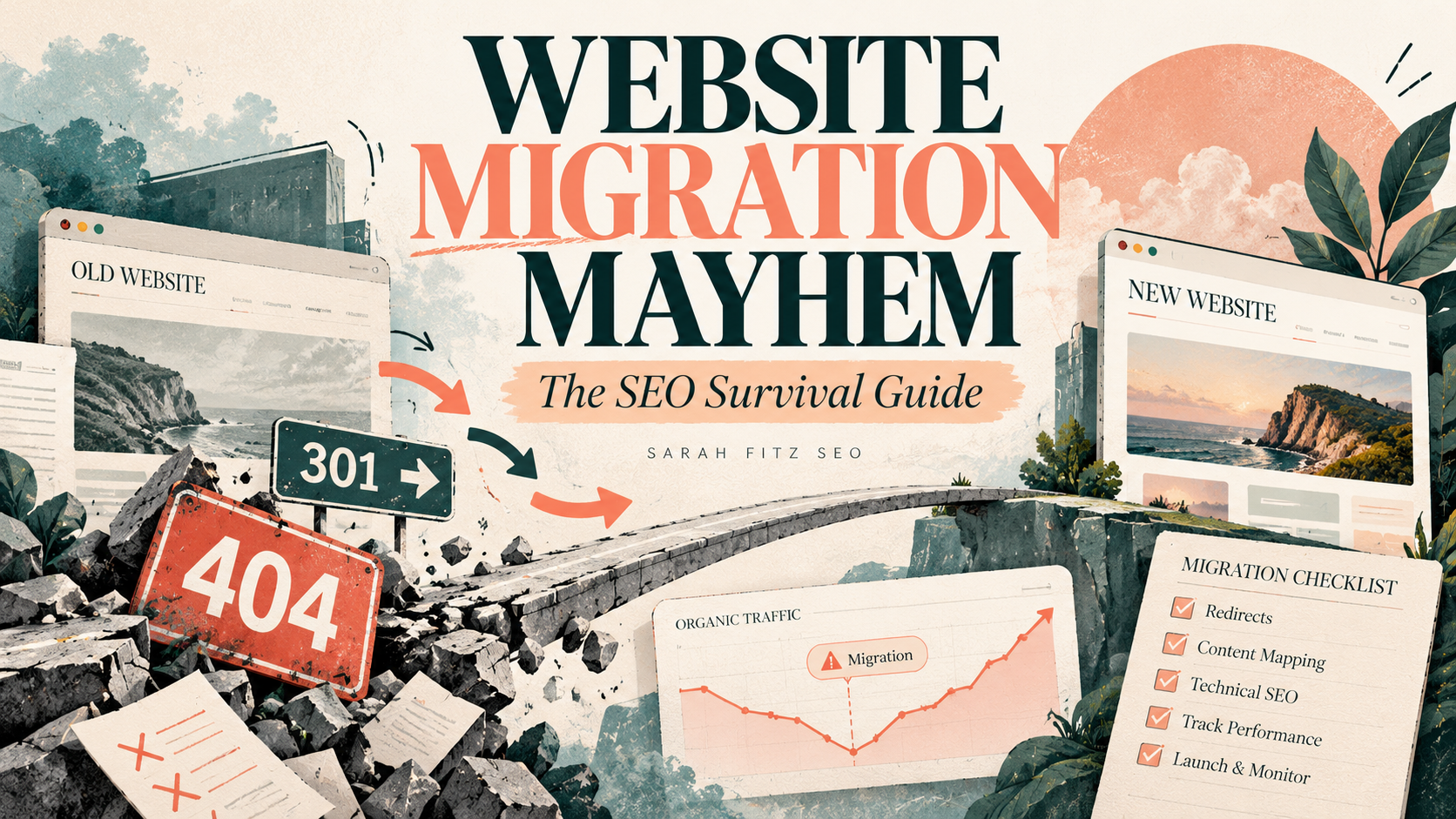 Technical SEO
The Ultimate SEO Website Migration Checklist: Expert Migration Tips to Protect Your Rankings, Traffic & Revenue
Planning a website migration? What to do before, during and after launch to protect your SEO, with free interactive checklists you can tick off, download and share.
Oct 8, 2026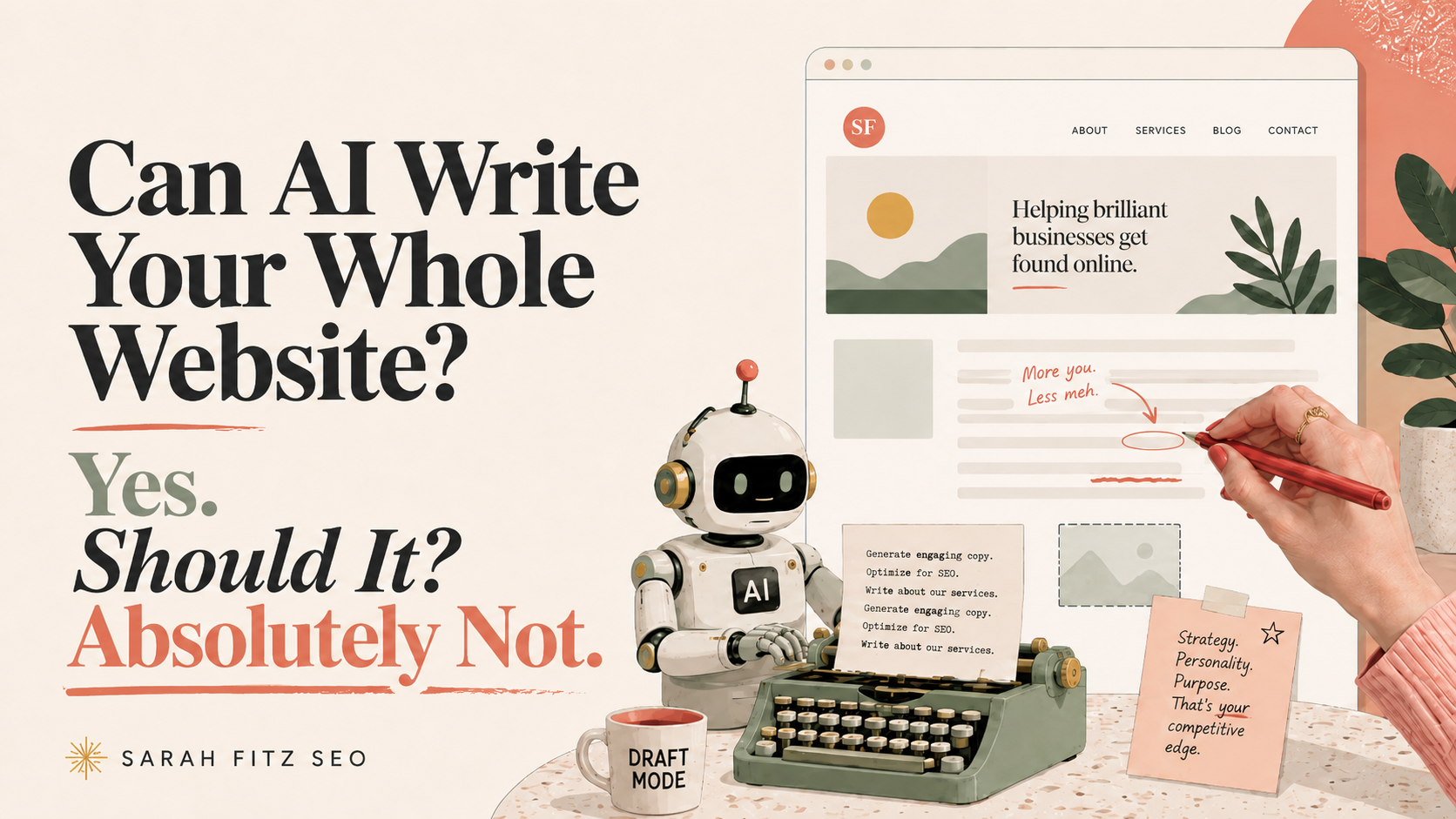 AI SEO
Can AI Write Your Whole Website? Yes. Should It? Absolutely Not!
In August 2026, Anthropic announced it was adding invisible watermarks to Claude-generated text. It’s a timely reminder that AI-written content is becoming easier to identify, but the bigger issue is what happens when businesses let AI do too much. Here’s where AI-generated website content can start hurting SEO, trust and conversions, and how to use it without losing the human touch.
Aug 11, 2026