
What Ex Love Islanders Teach Us About Staying Relevant In Search
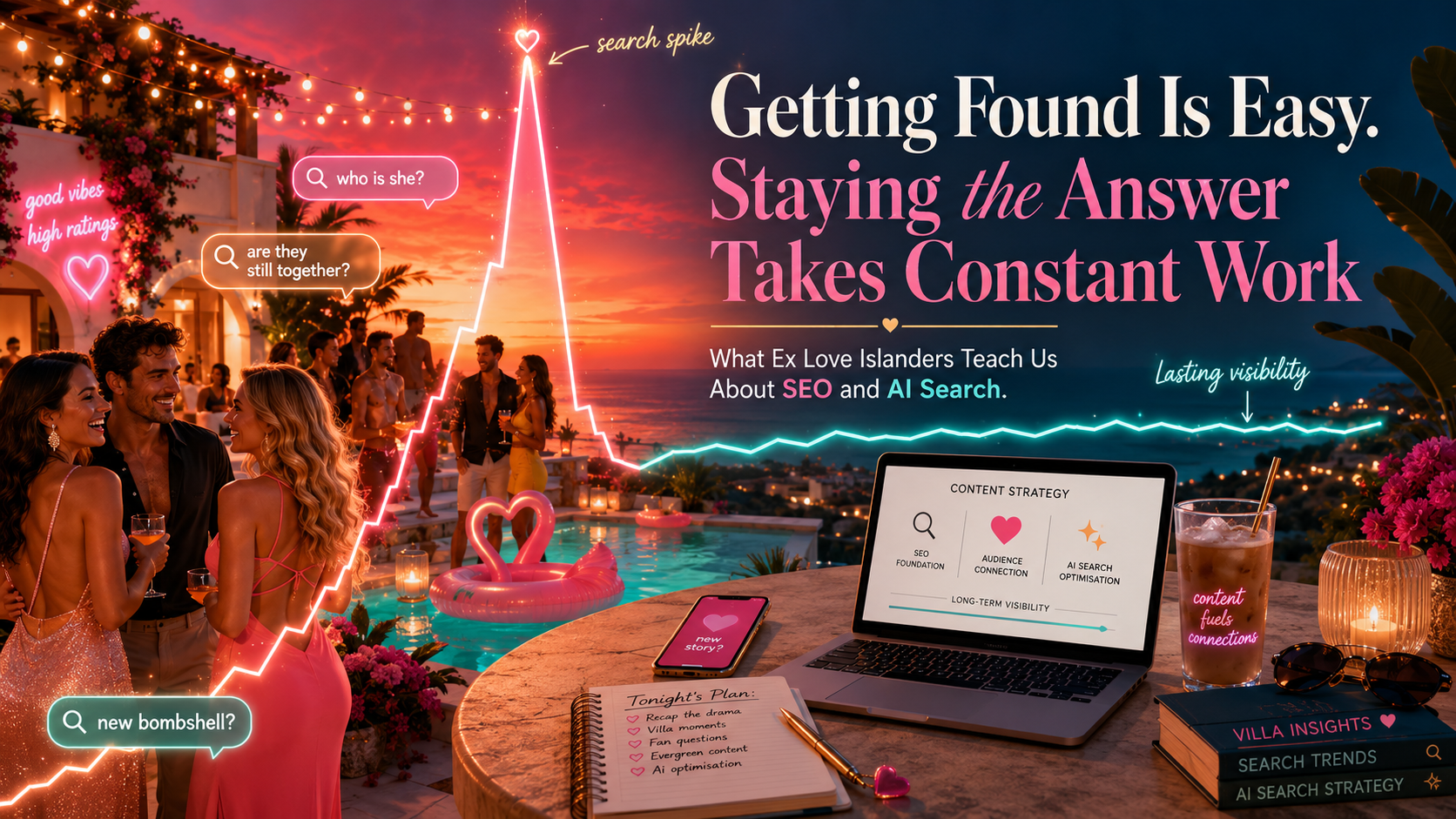
Cover images are made with AI, because this is a one woman business and I am not an illustrator. Every word underneath them is written by a human SEO with over a decade of experience.
One minute you're an unknown twenty-something from Kent. The next, you're a trending topic and the subject of a hundred "who is" searches before you've had the chance to say a word for yourself. With the villa about to close its doors for another year, here's the SEO lesson hiding inside every dumping, every Casa Amor twist, and every Islander who fades into oblivion by October: the search spike is basically a lottery win. Staying relevant afterwards is the tax bill nobody warns you about, and most people never pay it.
Love Island's summer series is in its final week, with the villa in Mallorca about to hand over that £50,000 prize and send this year's Islanders home. It's had a proper run to get there: a fake dumping in week one, and Aidan spending part of the series in the villa alongside his own brother Kavan, a first for the show. Casa Amor gave us the moment of the series, when Julia directed "póg mo thóin" (Irish for kiss my ass) at Sean and Lola, a clip that's been meme'd across TikTok and Instagram ever since. That row helped send Lola and Sean into the bottom three and out the door, while Julia and Lorenzo topped the public vote instead. With days left, bombshells Elicia and Ethan turned up anyway and stole Finley and Priya, because nobody gets to relax before a Love Island final.
All of that made brilliant telly. It also did the exact same thing to every name involved: turned someone Google had never heard of into a full-blown search spike overnight. The show hands out that spike for free. What happens next is entirely on them, and it's exactly where most of them stop trying.
The peak happens at the worst possible moment, and it doesn't last on its own
Here's the pattern. An Islander's search value is highest the exact night they're most vulnerable: the night they're dumped, blindsided in a recoupling, or absolutely eviscerated in front of the whole villa during Movie Night. That's when "who is X," "why did X get dumped," and "is X still with Y" volumes spike hardest. In search terms, that's the peak of the demand curve, the single highest point their name will ever reach. They didn't earn it. The edit did.
It's also the worst possible moment to do anything about it. Nobody sobbing in the beach hut is thinking "right, better get my bio sorted." They're off camera, upset, phoneless, and in absolutely no state to capitalise on the one moment their search value will ever peak this hard. Left alone, that peak is worth exactly one good week of traffic and not a day more. Turning it into anything longer lasting takes real, deliberate effort afterwards.
That's not a reality TV problem. That's every brand that's ever had a PR mention, a viral post, or a competitor's meltdown send people searching for them, with absolutely nothing ready to answer the question they're actually asking.
Fading into oblivion is the default, because staying visible is genuinely hard work
Watch what happens to most contestants after their season ends. Interest doesn't stay high, it collapses, fast. Within weeks, search volume for their name falls off a cliff. By the time the next series airs, most of them are essentially invisible again, just another name wheeled out for a "where are they now" listicle nobody clicks.
A handful don't fade, and it's not because they got luckier. They keep publishing content, keep landing brand deals visibly, keep giving journalists a reason to mention them again, week after week, long after the show has stopped talking about them for free. That's the entire difference between the ones who turn a villa stint into a career and the ones who turn it into a single line on a CV nobody reads: one group kept clocking in, the other assumed the algorithm owed them a favour.
In SEO terms, this is the gap between a traffic spike and topical authority. A spike gets you found once, for free, and asks nothing of you in return. Authority has to be built and then maintained, consistently, so that search engines, and increasingly AI tools, keep coming back to you instead of whichever rival, or fading Wikipedia stub, is still bothering to update theirs.
History already picked its winners, and it wasn't about villa time
We don't need to guess how this plays out. Love Island has been running long enough to prove the pattern every single year, and every year it comes down to the same split: who kept working at their visibility after the cameras stopped, and who didn't.
Post-Love Island winners
Molly-Mae Hague: Went in with an existing YouTube following in 2019, came out having built the biggest post-villa career the show's ever produced: creative director at PrettyLittleThing, her own fashion brand, and years of content that never really stopped.
Maura Higgins: Had none of that head start. No following, no platform, nothing beyond what viewers saw on screen. Still became one of the show's highest earners, because she treated leaving the villa as day one of a job, not the end of one. She has since gone on to host Love Island USA Aftersun and appeared on I'm A Celebrity, The Traitors USA and is soon to be a contestant on Dancing with the Stars USA meanwhile she is now the face of global brands such as Tresemme, L'Oréal Paris, MAC & has landed herself on Time100 Creator list for 2026.
Amber Gill: Won her series as the public's underdog, then moved like she had somewhere to be: incorporating her own company before she'd even left the villa, and turning that goodwill into one of the biggest fashion deals the show has produced. She has since gone on to be a podcast host, TV presenter, author & DJ.
Toni, Shakira & Yasmin ("The Big Three"): Turned a villa friendship into an actual job, hosting the show's own aftershow, Love Island: The Debrief. Proof that showing up for each other pays better than showing up for a photoshoot.
None of that had anything to do with how long anyone spent in the villa, how they were edited, or how the public voted on the night. It had everything to do with what they were still bothering to do months after the cameras stopped rolling.
This year's cast: who's set up to last
Charleen: Went in with a following and genuine hype already built before she'd set foot in Mallorca, then came out again after nine days flat. Expect her to barely notice the drop-off, she was doing the work before she'd even packed her suitcase.
Jasmine: Already runs her own business, which puts her ahead of most Islanders before she's posted a single "thank you for the support" caption.
Lorenzo & Julia: Topped the public vote before the final even aired, and Julia's already got the internet's attention thanks to one very memeable moment in Irish. Free publicity, basically.
All three have the raw material to stay visible, but only if they keep working it rather than treating this month as a lap of honour.
Ones with a harder road ahead
Finley: His storyline never gave him a clear identity beyond "the one in the love triangle."
Elicia: Already had a rough introduction to what happens when the public decides you're this series' villain before you've had the chance to argue otherwise.
Aidan (the wildcard): Don't be surprised if he turns up on an All Stars series in a year or two. The show has a habit of giving a second go to anyone with a strong story who didn't quite land the ending after leaving the villa, and he's exactly that type.
None of that is really about romance, luck, or the edit. It's about who keeps clocking in after the villa lights go off, and who assumes the algorithm will do it for them.
Why this matters even more for AI search
This is where it gets interesting for GEO specifically. AI Overviews and tools like ChatGPT don't work off a single viral moment either. They build their understanding of a person or a brand from everything published about them, accumulated and re-referenced over time. One dramatic night of press mentions might get you cited once. It won't keep you appearing in AI-generated answers six months later. That only happens if there's a steady, ongoing trail of content for the model to keep drawing from.
The contestants who stay relevant in AI search are the ones who kept feeding the web something new: fresh content, fresh mentions, a consistent angle AI tools can keep pointing back to. It's not a one-off task, any more than the Instagram grid is, and it's just as unforgiving the moment you stop. The ones who went quiet after the villa don't just fade from Google. They fade from the model's picture of them too, because there's nothing left for it to learn.
What to do when your brand gets a search spike
1. Give the attention somewhere worth landing
Have a page ready that actually answers whatever just made people search for you. Not from six months ago, kept current, properly linked into the rest of your site, with an obvious next step once someone's there: book a call, buy the thing, join the list. A spike is wasted the second the best available answer is an old press release, a dead social profile, or somebody else's article telling your story better than you have.
2. Don't stop at the first question
Nobody asks just one thing. Once the initial spike hits, look at what people are actually asking next, and answer that too: the FAQ, the follow-up post, the video, the interview. This isn't about milking the moment for all it's worth. It's about giving Google, and AI tools, more than one reason to keep finding you rather than just the one lucky headline.
3. Keep proving you're still worth finding
This is the bit almost everyone skips. Once the attention drops off, that's exactly when the real work starts: keep publishing, keep updating the pages that matter, keep earning mentions you didn't write yourself. And actually check it's working. Is branded search still happening. Are pages picking up links. Ask ChatGPT and Perplexity what they currently say about you and see if it's even accurate. The spike gets you noticed. What you do after is what makes it last.
The takeaway for brands
Every business gets its own version of a dumping night: the press feature, the viral post, the seasonal spike in demand. The mistake is never getting that moment. It's assuming the moment will do the ongoing work for you afterwards.
That's a lot of what actual SEO and AI search work is: making sure you have somewhere solid for that demand to land the moment it appears, and then a consistent content and authority-building rhythm that keeps going long after the spike itself is forgotten. It's not a project with an end date. It's the same ongoing discipline that separates the Islander still getting brand deals three years later from the one nobody remembers past October. One good week of traffic is easy. Being the answer Google, and AI, keep reaching for takes showing up for it, on repeat, long after anyone's still clapping.
If you've had your own version of a dumping night lately, a spike in attention with nowhere built to catch it and no plan for keeping it, that's exactly the gap my content strategy and AI search work is built to close. Book a call if you'd rather be Molly-Mae than a line in next year's "whatever happened to" listicle.
Frequently asked questions
- What can Love Island contestants teach brands about SEO?
- That getting found once is the easy part. A burst of attention gives you visibility for a few weeks, but staying the answer people search for takes consistent output, relevance and a reason to keep coming back.
- Why does search visibility fade if you stop publishing?
- Interest moves on and so do search engines. Competitors publish fresher, better answers, your pages age, and demand shifts to whoever is currently active. Visibility is a position you defend, not a prize you keep.
- Is a spike in brand searches worth anything?
- Only if you capture it. A spike is demand pointed at you for a short window, so you need pages that answer what people are actually searching, a way to collect emails or follows, and something to sell them afterwards.
- How do you stay relevant in search long term?
- Pick the topics you want to own, keep updating the pages that already work, keep showing up on the platforms where your audience talks, and build enough brand recognition that people search for you by name.
- How often should I refresh old content?
- Review your top performing pages at least twice a year, and sooner if rankings slip, the advice dates or the market changes. Updating a page that already has authority usually beats writing a brand new one.
Need help understanding where your organic visibility stands?
Get a clear read on your search and AI performance, and the next moves worth making.
Contact me for a consultation todayKeep reading
All posts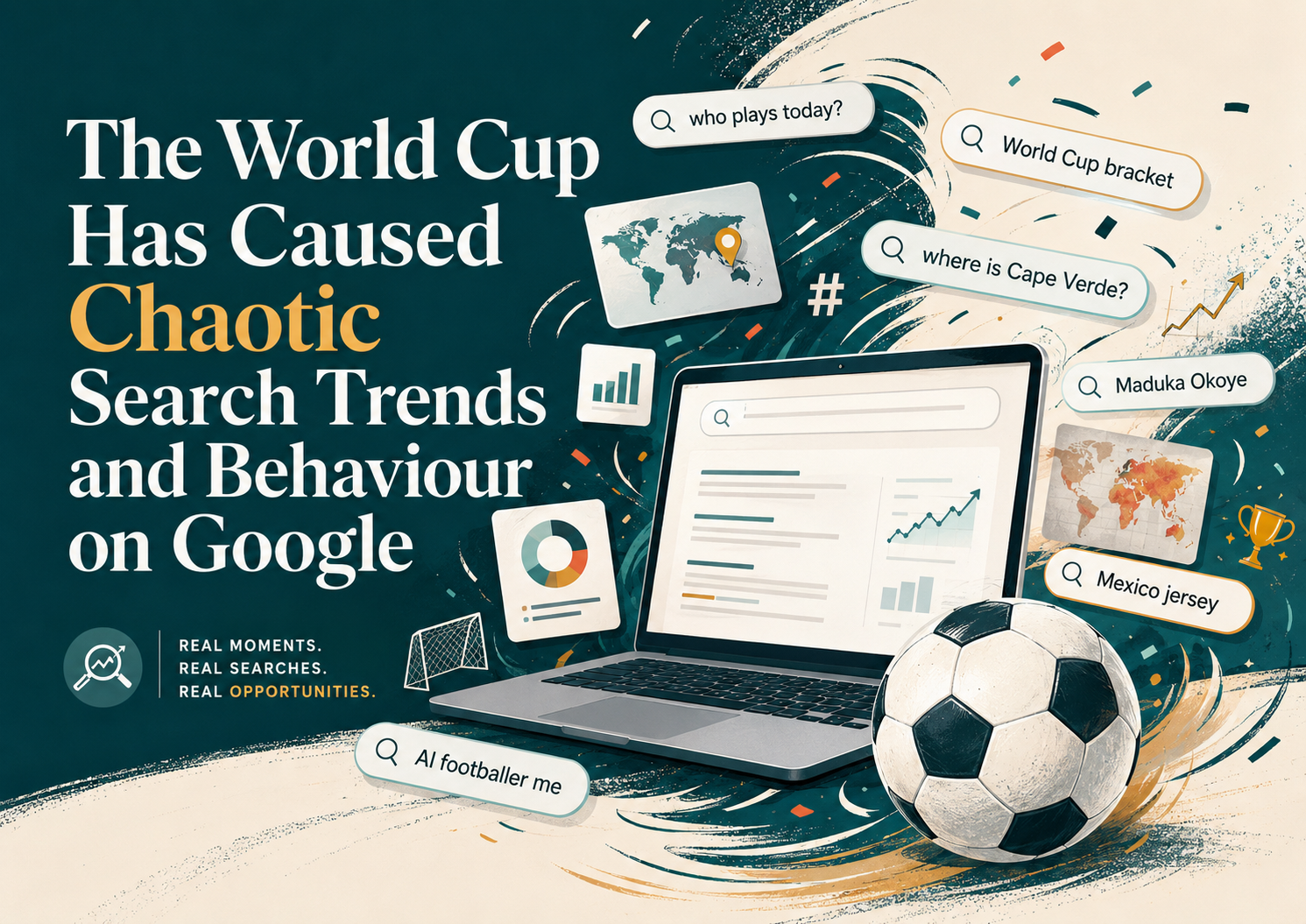 SEO Hot Takes
The World Cup Has Caused Chaotic Search Trends and Behaviour on Google
The FIFA World Cup 2026 is showing us exactly how people search when they are excited, confused, late to the conversation or desperately trying to sound informed in the group chat.
Jun 29, 2026 SEO Hot Takes
Your Website Isn’t Your Whole Brand Story: An SEO Lesson From The Secret Lives of Mormon Wives
Modern SEO isn't only about where your website ranks. It's about what people find, understand and believe about your brand across Google, AI search, social, Reddit, YouTube, reviews and the wider web. If you don't help shape that narrative, search will piece one together for you.
Jun 18, 2026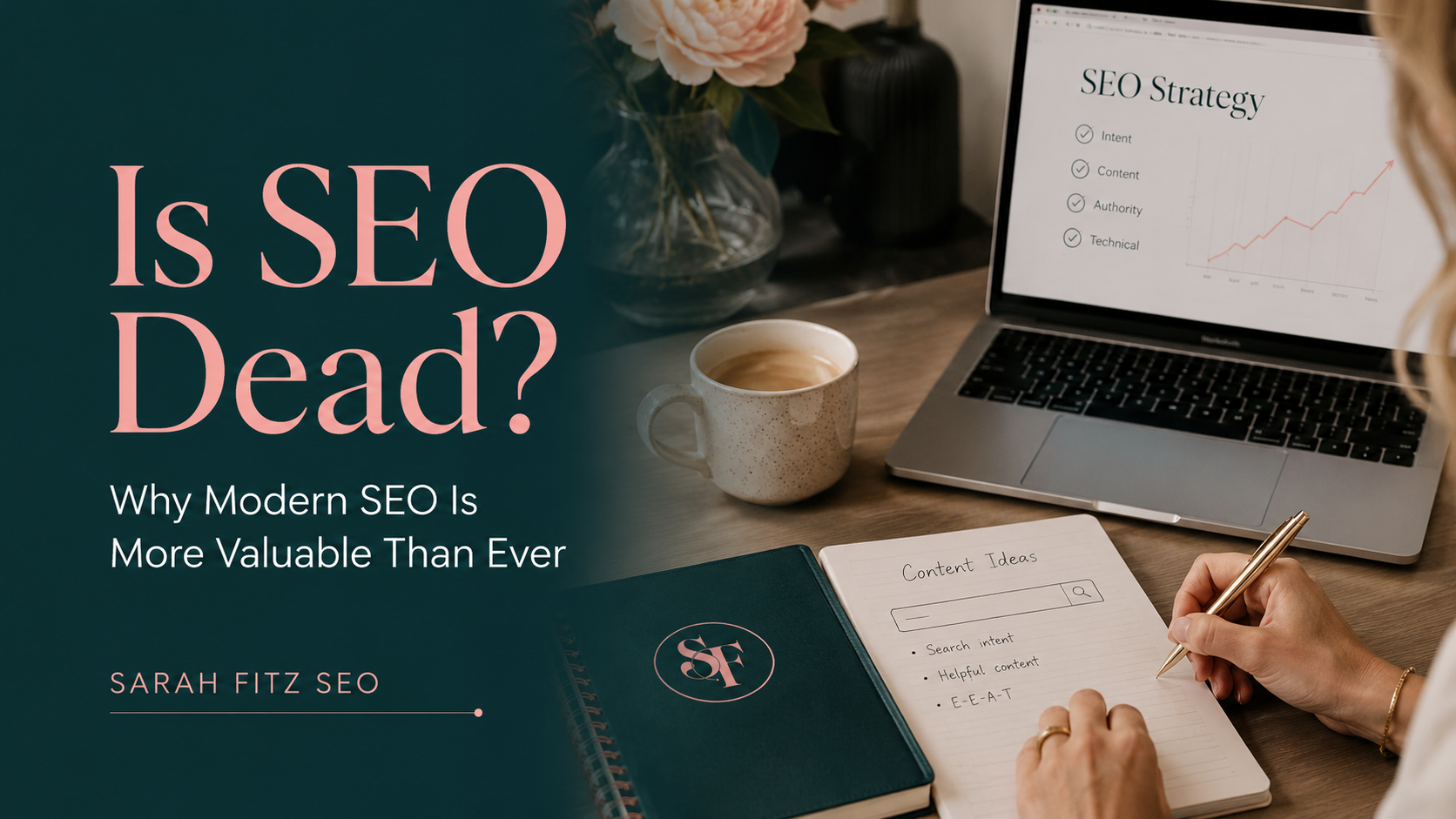 SEO Hot Takes
Is SEO Dead? No & Here's Why It's More Valuable Than Ever
SEO is not dead, but the old way of doing SEO is no longer enough. Here’s why search has expanded across Google, AI, YouTube, social and community platforms, and what brands need to do to stay visible, trusted and chosen.
Jun 10, 2026