
The World Cup Has Caused Chaotic Search Trends and Behaviour on Google
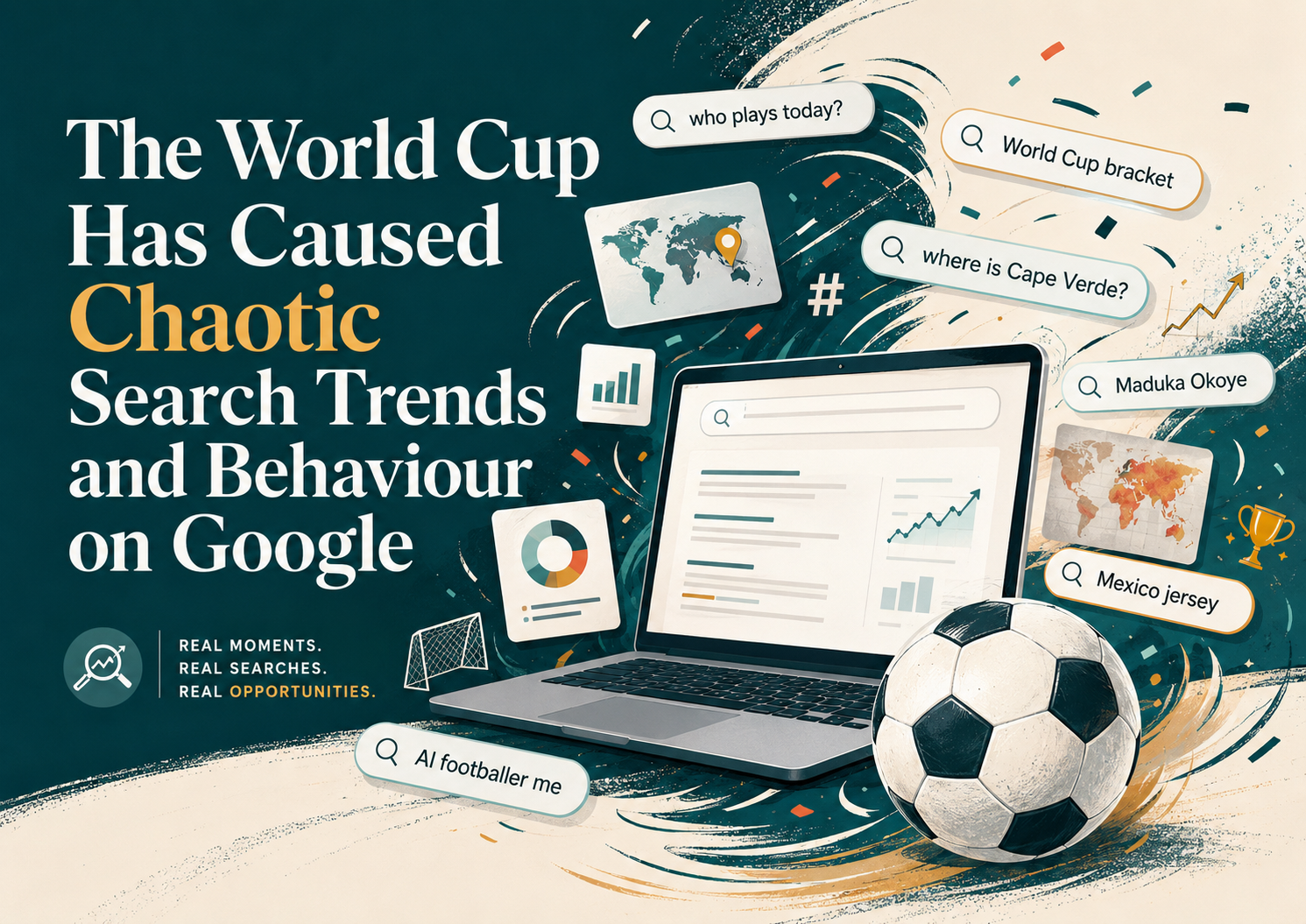
Cover images are made with AI, because this is a one woman business and I am not an illustrator. Every word underneath them is written by a human SEO with over a decade of experience.
The World Cup is not just creating football searches.
It is creating urgent searches, product searches, travel searches, culture-driven searches, AI searches and the occasional search for whether a duck can wear a football jersey.
That might sound like a random collection of internet nonsense, but it is actually a very good example of how search demand works now.
A huge cultural moment happens. People search for the obvious thing first. Then they search for the practical stuff around it. Then the weird, specific, emotional and completely unexpected questions start appearing.
That is where the real opportunity is for brands.
The companies that benefit are not always the ones shouting loudest about the World Cup. They are the ones that understand what people are likely to search for next, then make it easier to find, understand, buy, book or share.
1. Urgent searches: “Who plays today?” and “What time is the match?”
People are searching for World Cup fixtures, scores, brackets, team line-ups and qualification rules because they need an answer immediately. They are not looking to become football historians. They are trying to work out whether they can make it to the pub after work.
What this reveals about search:
A lot of high-value search intent is urgent and practical. People do not always want a long guide. Often, they want one clear answer without having to scroll through someone’s life story first.
What brands should do:
Make your most important answers impossible to miss. Build clear FAQ sections, comparison pages, pricing pages, stock availability pages, booking information and location pages. Keep them updated and easy to find from search.
The question for brands is not just “what might someone search?” It is “what do they need to know in the next thirty seconds so they sound like they know their stuff in the group chat?”
2. Practical searches: The World Cup creates demand far beyond football
A 48-team tournament across 16 host cities is not just creating searches for football. It is creating demand for flights, accommodation, restaurants, public transport, viewing parties, stadium routes and places to stay near a match without remortgaging the house.
What this reveals about search:
Search demand moves outwards. Someone might begin with “World Cup fixtures” and end up searching for a hotel, a pub with a big screen, an airport transfer or a restaurant reservation.
What brands should do:
Do not only optimise for your core product or service. Map the questions that happen before and after it.
A hotel should not only target “hotel in Miami”. It should consider pages for stadium access, match-day stays, group bookings, transport advice and nearby places to eat. A restaurant should not only target “restaurant near me”. It should consider “where to watch football”, group tables and match-day bookings.
Who is doing it well:
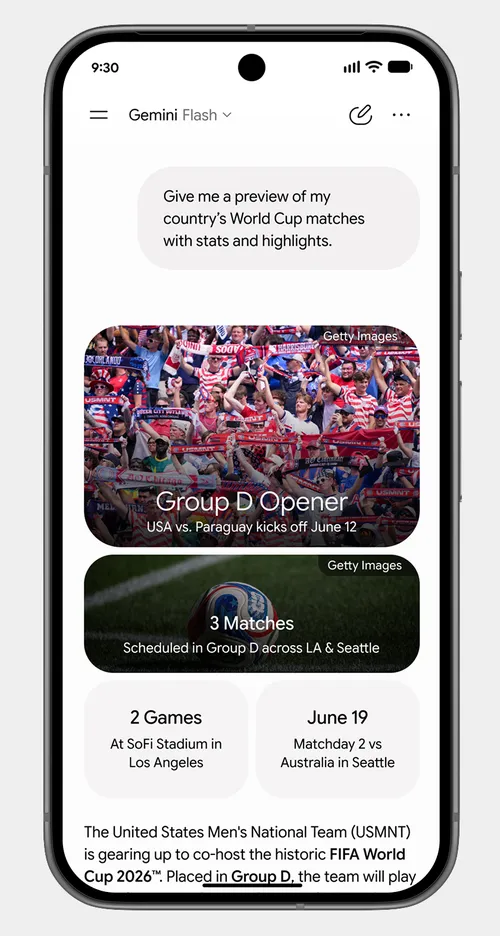
Google itself is a good example here. It is not treating the World Cup as one search query. Search now surfaces live scores, lineups, standings and brackets the moment you look up a match, with the option to pin a live score straight to your lock screen. Maps and Waze are doing the same thing from a different angle, Waze shows live scores when your car is stopped, and Maps can find you a table at a pub showing the match, not just directions to the stadium. It understands the same event creates different needs depending on where someone is and what they are trying to do. Read this article to see all of the ways Google is keeping fans updated during the tournament.
3. Product demand: A football shirt is never just a football shirt
World Cup kits are creating demand for team shirts, children’s shirts, women’s fits, retro versions, oversized styles and, because the internet cannot be normal for five minutes, jerseys for dogs, ducks and potentially any animal willing to stand still long enough.
What this reveals about search:
Cultural moments create a chain reaction of related searches. One product does not have one keyword. It has dozens of variations shaped by audience, size, location, style, urgency and whatever has just gone viral.
What brands should do:
Build strong category and filter pages before demand arrives. Make product pages easy to find for long-tail searches, not just the broad category term.
That means thinking beyond “Mexico World Cup jersey” and preparing for searches around women’s fits, children’s sizes, delivery cut-offs, gift ideas, local availability and yes, probably pet jerseys if that is remotely relevant to your brand.
Who is doing it well:
Adidas has benefited from the World Cup kit demand because it has the product range, global distribution and clear team-specific merchandising ready when interest spikes. The opportunity is not just having a great shirt. It is making that shirt easy to discover and buy in every format people actually search for.
4. Cultural searches: The internet will make football conversations weird
The World Cup does not stay contained within football. It leaks into TikTok, podcasts, celebrity culture, memes and group chats.
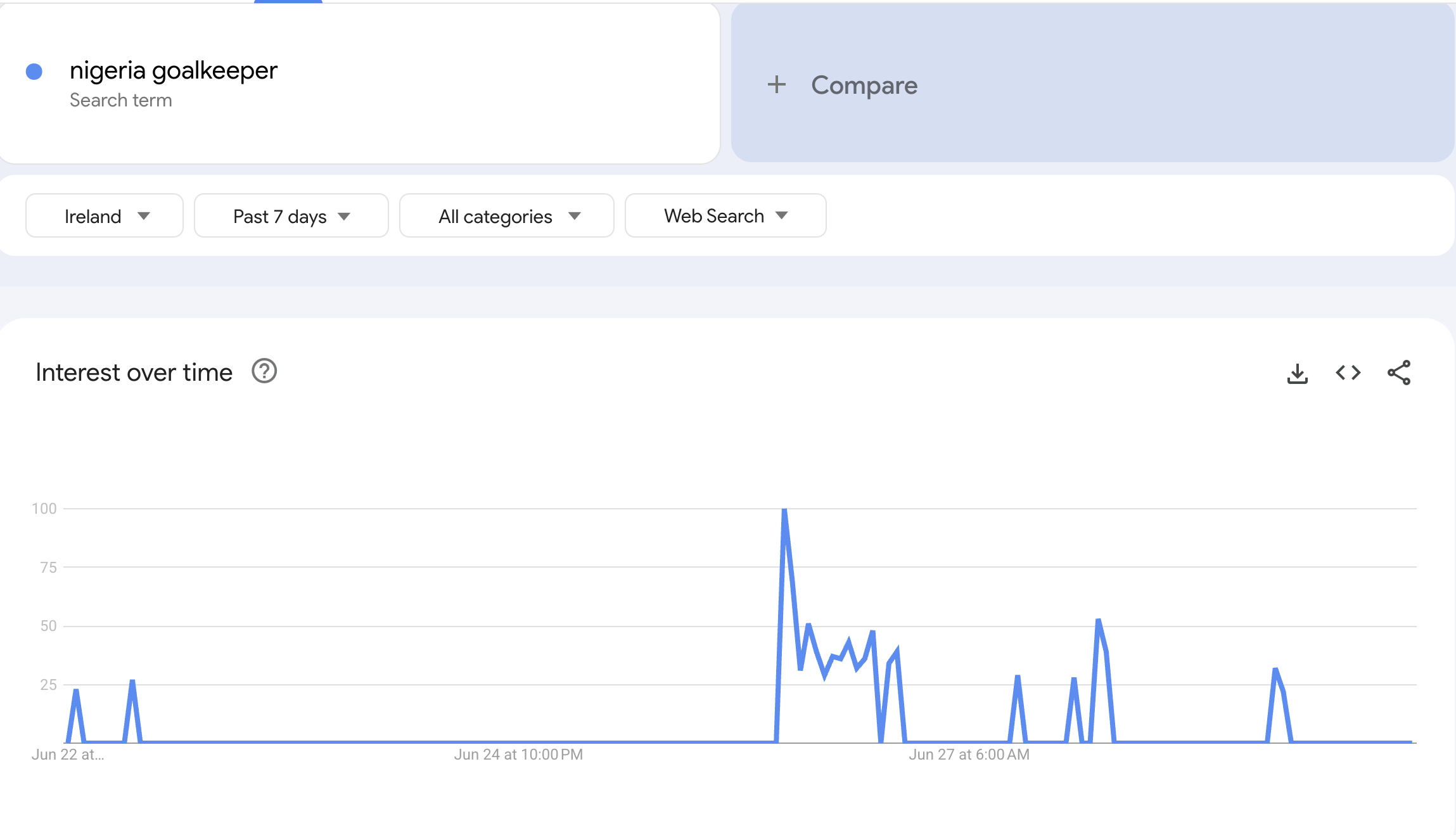
That is how a conversation on My Therapist Ghosted Me can send people searching for Maduka Okoye, despite Nigeria not even being in the tournament!!
Or how thousands of Scotland fans can descend on Boston with kilts, bagpipes and enough commitment to “No Scotland, No Party” that Boston and Glasgow have now agreed to become sister cities. That is not just a nice football story. It is a perfect example of how a cultural moment can create demand far beyond the match itself. Suddenly, people are searching for Scotland fixtures, Tartan Army videos, Boston bars, Glasgow travel guides, kilts, bagpipes and whether this is the most successful bit of Scottish tourism marketing ever created without anyone in a boardroom planning it.
What this reveals about search:
Search demand can be triggered by culture or a fun news story rather than a planned campaign. People hear something on a podcast, see it on TikTok or spot it in a meme, then Google the context. Forever more, people could be searching why is Glasgow a twin city of Boston and be led to the footage of Scotland fans in Boston during the 2026 World Cup.
What brands should do:
Monitor the conversations happening around your industry, not only the keywords already in your spreadsheet. Watch social search, TikTok, Reddit, YouTube, podcasts and Google Trends but also keep an eye on how your audience behaves offline. Then decide whether there is a useful, credible way to contribute to your audiences behaviour or conversations.
The important word there is credible. Not every viral moment needs a brand response. Nobody needs a tax software company doing a “we also covered our logo like Levis” post two days after everyone else.
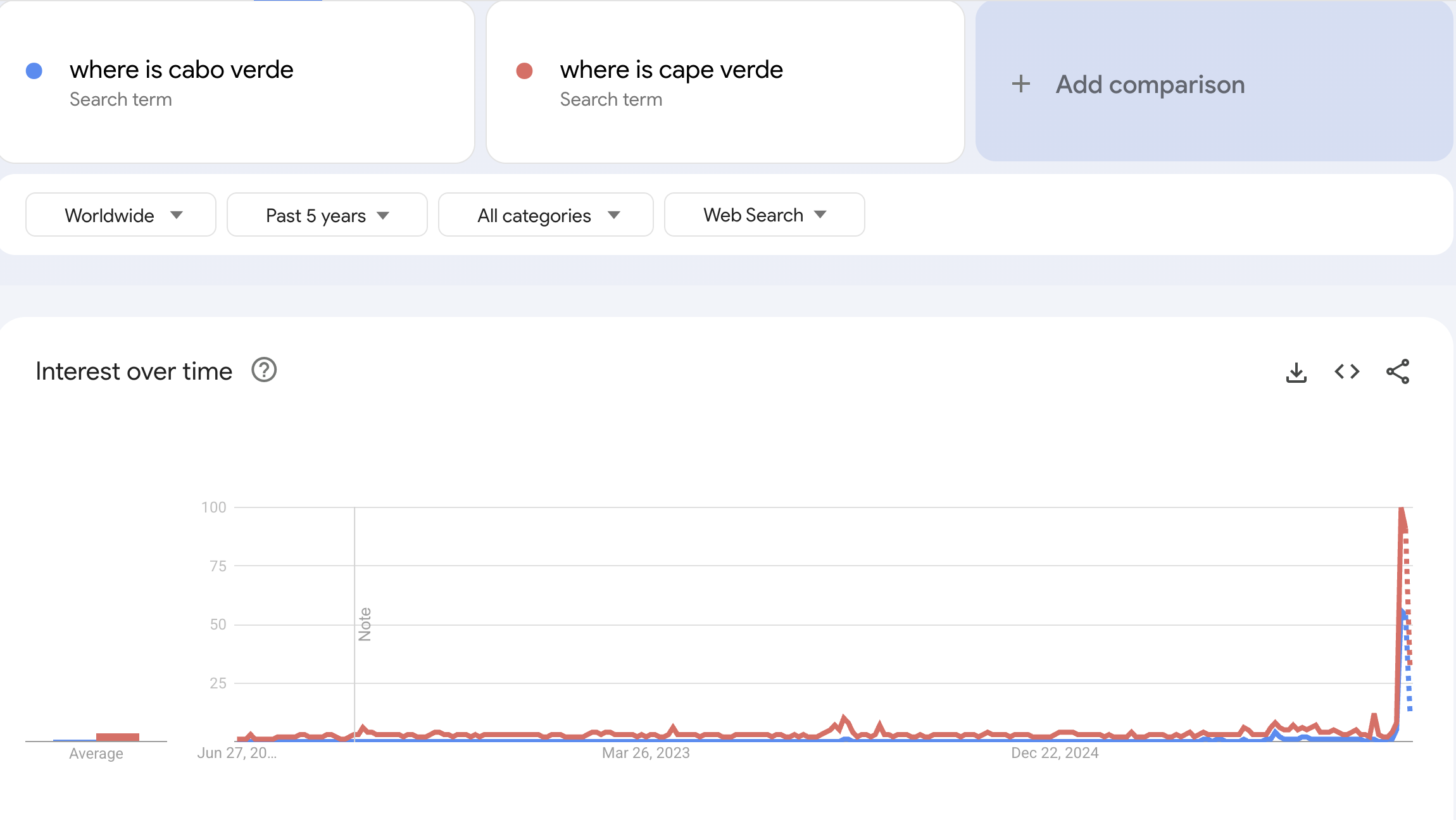
5. Destination discovery: “Where is Cape Verde?” and other late geography lessons
Every World Cup creates interest in countries people suddenly need to locate because they beat someone we assumed would win.
A strong performance can lead from “where is Cape Verde?” to searches about population, language, food, travel, flights, hotels and whether it is worth visiting.
What this reveals about search:
A sporting moment can create awareness for an entire country, city or category overnight. Search is often the first step between “I have heard of this” and “I might actually go there.”
What brands should do:
Destination brands, airlines, hotels and travel companies should be ready to capture discovery demand with useful content. Not generic tourism pages full of stock photos, but real answers to the questions newcomers ask first.
Where is it? How do I get there? Is it expensive? When should I go? What should I do? Is it suitable for families? Can I visit without hiring a car?
When cultural interest spikes, the best content is usually the content that removes uncertainty.
6. Participation demand: AI versions of ourselves as professional footballers
The World Cup has also created demand for AI tools that turn ordinary people into goal-scoring footballers, stadium heroes and people who look capable of playing ninety minutes without needing a lie-down afterwards.
What this reveals about search:
People do not only want to watch a cultural moment. They want to participate in it.
They want to wear it, post about it, personalise it, create something from it and send it into a group chat with no context.
What brands should do:
Ask whether your content gives people a way to join in. That could mean a template, quiz, calculator, generator, customisation tool, social challenge, interactive guide or genuinely useful downloadable resource.
The strongest content is not always content people consume. Sometimes it is content they can do something with.
7. Trend-jacking: Attention is not the same as demand
The covered-logo campaigns from brands such as Levi's, Heinz and Gillette were clever because they turned FIFA's clean-venue restrictions into a joke people instantly understood. Levi's TikTok clip alone hit around 12 million views, and by the time Gillette ran its version, social listening data had it leading the pack on raw mentions.
But attention alone is not the end goal.
What this reveals about search:
A viral campaign like this can generate likes, press coverage and plenty of "this is brilliant" comments without necessarily creating branded searches, website visits, sales or longer-term recognition. Only Levi's, Heinz and Gillette know internally whether any of it led to an increase in branded search or sales, the public numbers are all conversation volume, not commercial impact. And conversation volume has diminishing returns. By the third and fourth brand to try the same joke, commenters were already calling it derivative.
What brands should do:
Before jumping on a trend, decide what success would actually look like. Is it branded search growth? Direct traffic? Product sales? Email sign-ups? Social engagement? New audience reach?
Then make sure the campaign gives people somewhere useful to go next. A trend without a landing page, relevant product, clear message or measurable action is often just a very expensive way to keep the social team busy.
Final whistle
The World Cup is not teaching us that people search for football during football tournaments. We already knew that.
It is showing us how quickly one event can create layers of demand. Practical demand. Product demand. Travel demand. Cultural demand. Participation demand. And, occasionally, demand for a jersey for your duck.
For brands, the opportunity is not to chase every trending topic in the hope that some of it sticks.
It is to understand the questions that a trend creates next, then be useful when people go looking for the answers.
That is what modern SEO looks like. Not just chasing every trend but understanding what a trend makes people do next.
Need help turning search behaviour into organic growth?
I help brands and agencies understand how people are discovering them across Google, AI search, social search and the wider customer journey, then turn that insight into practical growth opportunities.
Contact me today to start your own organic growth journey.
Frequently asked questions
- Why do big cultural events change search behaviour so much?
- A moment like the World Cup creates layers of demand. People search the obvious thing first, then the practical things around it, like travel, food, venues and gear, then the strange, specific and emotional questions nobody planned for.
- How can brands benefit from event driven search?
- By answering what people need next rather than shouting about the event itself. Fixture times, opening hours, delivery cut offs, stock, locations and simple explainers all convert better than a themed campaign page.
- Do I need to be in the same industry to benefit?
- No. Travel, hospitality, retail, transport, TV and drinks brands all pick up demand from the same moment. If your customers are affected by it, there is a version of the question you can answer.
- How far in advance should I plan seasonal SEO content?
- Publish at least six to eight weeks before demand peaks so pages have time to be crawled, indexed and gather early signals. Trying to rank on the day of the event rarely works.
- What happens to those pages after the event?
- Keep the ones with recurring demand and update them each cycle rather than deleting them. A page that has already earned authority is far easier to refresh than to rebuild from scratch.
Found this useful? You can buy me a coffee ☕
Need help understanding where your organic visibility stands?
Get a clear read on your search and AI performance, and the next moves worth making.
Contact me for a consultation todayKeep reading
All posts SEO Hot Takes
What Ex Love Islanders Teach Us About Staying Relevant In Search
The Love Island villa hands every Islander a search spike for free. What they do with it decides whether they end up as the next Molly-Mae or forgotten by October. Keep reading to see who I'm backing to win off the back of the 2026 series & 3 things your brand needs to do to stay visible & relevant.
Jul 21, 2026 SEO Hot Takes
Your Website Isn’t Your Whole Brand Story: An SEO Lesson From The Secret Lives of Mormon Wives
Modern SEO isn't only about where your website ranks. It's about what people find, understand and believe about your brand across Google, AI search, social, Reddit, YouTube, reviews and the wider web. If you don't help shape that narrative, search will piece one together for you.
Jun 18, 2026 SEO Hot Takes
Is SEO Dead? No & Here's Why It's More Valuable Than Ever
SEO is not dead, but the old way of doing SEO is no longer enough. Here’s why search has expanded across Google, AI, YouTube, social and community platforms, and what brands need to do to stay visible, trusted and chosen.
Jun 10, 2026