Your Website Isn’t Your Whole Brand Story: An SEO Lesson From The Secret Lives of Mormon Wives
Before you read on, find out which Mormon Wife is running your SEO strategy.
Which Mormon Wife Is Your SEO Strategy?
Your SEO strategy has a personality. Unfortunately, it might also have a MomTok equivalent.
Answer a few questions about SEO, content, brand, AI search and marketing to discover who's really running your organic strategy.
This may affect the sisterhood.
Unofficial fan quiz. Not affiliated with Hulu, Disney or The Secret Lives of Mormon Wives.
Want the full-screen experience? Play the full game
The cast of The Secret Lives of Mormon Wives understand modern organic visibility better than most brands.
And honestly, I am only half joking.
Because the TV show is not the whole customer journey.
The show is the landing page.
The real narrative building happens everywhere around it.
On TikTok. Instagram. Reddit. Podcasts. Google. YouTube. Entertainment sites. Interviews. Comments. Group chats. AI summaries.
That is where people decide who they believe, who they trust, who they side-eye, who they root for and whose version of events they think is complete nonsense.
Brands are operating in exactly the same kind of environment.
Your website might tell people who you are but it no longer gets to tell that story alone.
The TV Show Does Not Control the Story
Take Taylor Frankie Paul.
She is the reason Secret Lives of Mormon Wives exists at all. In 2022, before there was a show, she posted a video on TikTok saying her marriage was ending and dropped a bombshell about a 'soft swinging scandal'. The clip spread worldwide. Then a far bigger story emerged, about MomTok, who was 'soft swinging', what the hell ‘soft swinging’ actually was, and the fractures running through the whole group. It took on a life of its own before Taylor had said more than a few hundred words.
By the time Hulu got involved, TikTok had already written the first draft of the show.
The show gave her an official edit. A chance to add context, nuance, and her own version of events. But the wider internet had already formed a view. Reddit had done its investigation. TikTok recap accounts had their takes. Reaction videos had racked up millions of views.
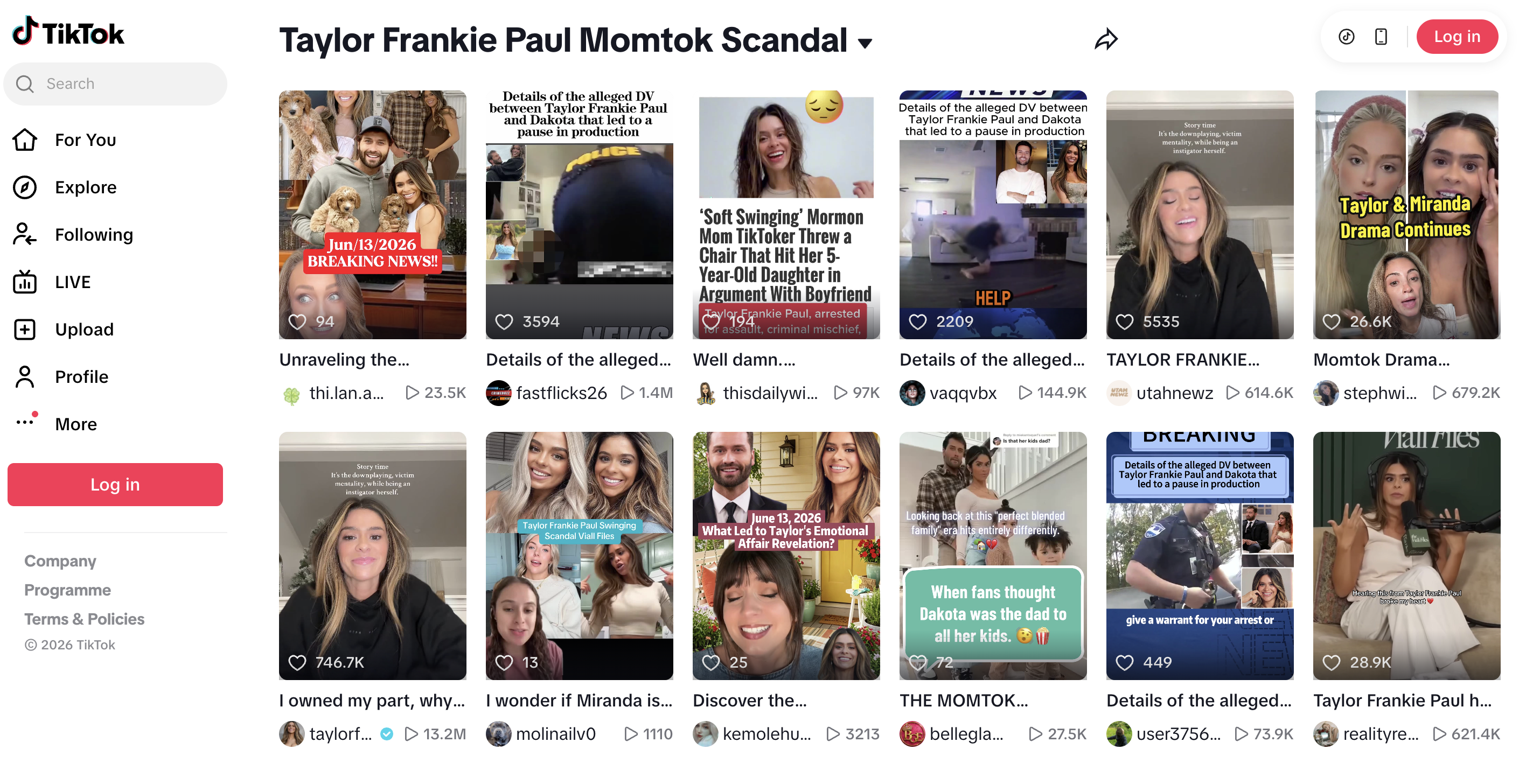
She could present her side but she could not erase what was already out there.
The TV show is only one source.
Sound familiar? Brands have the same problem.
Your Website Is Not the Whole Story
A lot of brands still treat the website as the full customer journey but it is not.
The website matters, of course. It is usually where you explain what you do, who you help, what you offer, and why someone should choose you but it is not the only place people form an opinion.
Before someone enquires, buys, books, subscribes or signs up, they might search your brand name. They might look for reviews. They might check LinkedIn. They might ask ChatGPT to compare you with a competitor. They might read Reddit. They might watch YouTube. They might see what people are saying in comments. They might search for "[your brand] alternatives" or "[your brand] reviews" or "[your brand] vs competitor."
By the time they land on your website, they may already have a half-formed opinion.
That opinion may not have come from you.
The show gives the official edit. The wider internet gives the unofficial narrative.
Brands face exactly the same dynamic. Your website gives your official version. The internet gives the messy, searchable, comment-section version.
Both matter.
Your Homepage Is One Witness Statement
This is the mistake I see most often.
Brands assume that because they have explained themselves clearly on their own website, the job is done.
But your own website is only one source of information.
Search engines and AI tools are not only looking at what you say about yourself. They are also looking at what other sources say, how consistently you are described, where you are mentioned, what topics you are connected to, and whether the wider web reinforces or contradicts your positioning.
Your homepage is not your whole brand narrative. It is one witness statement.
Your reviews are another. Your LinkedIn presence is another. Your YouTube content is another. Your digital PR is another. Your Reddit mentions are another. Your comparison pages are another. Your third-party profiles are another. Your founder content is another. Your customer stories are another. Your AI search presence is another.
Together, they shape how your brand is understood.
If all of those signals are clear, consistent and credible, your brand becomes easier to trust.
If they are vague, messy or contradictory, it becomes harder.
Social Search Is Not Separate From SEO
One of the reasons Secret Lives of Mormon Wives works so well as a metaphor is because the story does not stay neatly inside one platform.
The show creates the main event. But the conversation spreads everywhere.
The cast's own TikTok and Instagram content travels far beyond their feeds. Comments become reactions. Reactions become TikTok stitches. Podcasts analyse every move. Reddit threads investigate it. Entertainment sites turn it into headlines. Fans consume all of it and form their own version of events.
Take the Jessi and Chase drama from spring 2026. It wasn't part of the season that had just aired, but audiences still pieced together what had happened through Miranda Hope's Instagram and TikTok activity, apology flowers, the "backstabber" TikTok and later interviews.
The content never really stops, and neither do the storylines. Even when a new season isn't airing, TikTok, Instagram, podcasts, interviews, Reddit and entertainment coverage keep the narrative moving.
Brands operate in exactly the same kind of messy, content-heavy environment. Your website may contain the official version, but people keep researching, comparing and forming opinions everywhere else.
People do not only use Google when they want to discover or research something anymore. They use TikTok, YouTube, LinkedIn, Reddit, Instagram, AI tools, review platforms, marketplaces and online communities.
And brands are not only discovered when somebody actively types a query into a search box. Discovery increasingly happens through algorithmic feeds, recommendations, creators, communities and conversations.
The Mormon Wives cast understands this almost instinctively. Even between seasons, they continue creating and participating in the conversations that keep people interested and keep people searching.
That doesn't mean SEO is dead. It means SEO has expanded.
Modern SEO needs to understand how people search across multiple surfaces, not just how they behave on a traditional search results page.
Because someone might discover you on social, search your brand on Google, compare you through AI, check reviews, read a blog post, and then come back later through direct traffic.
In analytics, that journey looks simple. In reality, it was not.
Demand Often Starts Before the Google Search
Nobody randomly wakes up with an urgent need to Google the latest MomTok drama.
Something normally creates the curiosity first.
A TikTok. A clip from the show. An Instagram Story. A headline. A podcast. A friend mentioning it.
Then comes the search.
Brands work the same way.
Social content, PR, influencers, YouTube, offline campaigns, communities and word of mouth can all create demand before someone ever searches Google.
SEO's role is not always to create that demand from scratch.
Sometimes its job is to capture demand that another part of your marketing created.
If somebody hears about your brand on TikTok, through a friend, on a podcast or in an article and subsequently Googles you, what do they find?
Do you dominate your own brand search?
Do they immediately understand what you sell?
Are your reviews strong?
Are credible third parties talking about you?
Does your social presence reinforce the same positioning?
Do AI tools understand what you are known for?
Or does somebody hear about you elsewhere, search for you and somehow end up more convinced by a competitor?
That is why brand search and the wider search journey matter.
SEO shouldn't exist in a silo from PR, social, content or brand marketing because the customer certainly isn't experiencing them in silos.
If You Do Not Shape the Narrative, Search Will Pick One For You
Here is a scenario that comes up more than you would think.
A brand's homepage says they are known for outstanding customer service. Their tone of voice is premium. The photography is polished. The messaging is tight.
But their Google Business Profile sits at 3.2 stars. Their Trustpilot page has reviews talking about slow response times and difficulty getting refunds. There are Reddit threads where former customers are warning others off. And when you ask an AI tool what people think of them, the summary is not flattering.
Which story wins?
Not the About page.
This is what search has always done, and it is doing it more visibly now. It exposes the gap between what a brand wants to be known for and what the wider internet actually understands.
Reality TV cast members can try to explain themselves, but if TikTok, Reddit, headlines and recap accounts frame them one way, it becomes very hard to undo.
The same applies to brands.
If your website says you are premium but your reviews suggest poor service, people will notice. If your homepage claims expertise but there are no author bios, no case studies and no third-party proof, people will notice. If your messaging says one thing and AI search summarises you differently, people will notice. If competitors are showing up in comparison content and you are absent, people will notice.
That is why narrative shaping matters. Not in a fake or manipulative way. In a strategic one.
You need to help search engines, AI tools and real people understand who you are, what you do, who you help, what you should be trusted for, why you are different, where your expertise shows up, and what other credible sources say about you.
If you do not help shape that story, search will piece one together for you.
And you may not like the edit.
AI Search Makes Brand Clarity Even More Important
AI search adds another interesting layer to this.
With traditional search, someone might receive ten blue links and decide which sources they want to investigate.
AI interfaces can instead provide a synthesised answer.
If someone asks:
"What is [your brand] known for?"
"Is [your product] worth buying?"
"What are the best alternatives to [competitor]?"
"Which company should I use for X?"
"What are the pros and cons of [brand]?"
They may receive an answer built from information available across multiple sources.
That creates a very different visibility challenge.
It is no longer enough to ask:
Does my website rank?
I also want to know:
Does the wider internet provide enough clear, consistent and credible information for search engines and AI systems to understand what this brand should be associated with? Which means you need to consider:
If you want to be known for something, is there evidence supporting it?
Do credible third parties talk about you?
Do customers use similar language in reviews?
Does your website explain it clearly?
Do your experts demonstrate genuine expertise?
Are you being discussed in the places your audience actually uses?
Are you included when people compare solutions in your category?
Because if the story is unclear, search systems still have to make sense of the information available. Just like viewers piecing together a MomTok feud from twenty TikToks, three podcast interviews and somebody's suspiciously timed Instagram Story. They will reach a conclusion and you just might not love the conclusion they reach.
Visibility Is Not The Same As Being Chosen
This is probably the biggest SEO lesson in the whole article.
A reality TV cast member can be incredibly visible and still not be trusted.
Brands can do exactly the same thing.
You can rank number one, you can generate millions of impressions, you can appear in AI answers, you can go viral, you can have thousands of backlinks and you can dominate social media.
But then what?
What does someone find when they look closer?
Do they understand what you actually offer?
Do they trust you?
Do they see evidence of expertise?
Can they find good customer experiences?
Can they compare you easily?
Does your content answer the questions they genuinely have?
Does your brand appear consistently across different platforms?
Do third parties reinforce your claims?
Does someone have a reason to choose you instead of the five other businesses they have open in different tabs?
Because visibility without trust or relevance does not necessarily drive revenue.
SEO should help a brand become:
Findable.
Understandable.
Credible.
Chosen.
The first one gets you into the conversation and the other three help turn organic visibility into business growth.
So, How Can Brands Shape Their Search Narrative?
Start by searching your own brand like a customer would.
Search:
your brand name
your brand + reviews
your brand + Reddit
your brand + alternatives
your brand + complaints
your brand vs your biggest competitor
your founder's name
your main product or service category
Then look beyond standard Google results.
Search TikTok and YouTube. Look at Reddit. Check review platforms. Look at the third-party websites ranking for your brand.
Then ask AI tools such as ChatGPT, Gemini or Perplexity:
What is [brand] known for?
Who are [brand]'s main competitors?
What are the strengths and weaknesses of [brand]?
Would you recommend [brand] for [target customer/use case]?
Don't just check whether your brand appears.
Look at how it appears.
What attributes keep showing up?
What are you associated with?
What is missing?
Which competitors appear alongside you?
Which external sources seem to be influencing the conversation?
Then ask the most important question:
Does the internet's version of your brand match yours?
If not, that is an SEO problem.
And a brand problem.
And probably a content problem too.
The Real SEO Lesson From Reality TV
People rarely form opinions from one source; they build them through repeated signals.
That is how reality TV narratives are built but it is also how brand narratives are built.
Modern organic visibility is not just about getting one page to rank. It is about making sure the right story shows up across the places people search, compare and decide who to trust.
That means your SEO strategy needs to think beyond your own website. It needs to consider brand search, social search, AI search, reviews, third-party mentions, digital PR, content strategy, YouTube, comparison queries and the wider conversation around your brand.
Because your customers are not only reading your website.
They are reading the room.
Need Help Understanding How Your Brand Shows Up in Search?
I don't know whether MomTok will survive Season 5. But SEO will.
Because people are still searching, comparing, questioning and forming opinions from whatever they find online. They are not only reading your website. They are looking at search results, social posts, Reddit threads, reviews, TikToks, YouTube videos, AI answers, headlines, comments and the wider conversation around your brand.
Your website matters. But it is not the whole story.
If you are not sure what people, search engines or AI tools are finding when they look for your brand, I can help.
I work with brands and agencies to build clearer, stronger organic visibility across Google, AI search, content, social search and the wider discovery journey.
Not sure what edit of your brand is showing up online? Let's find out. Contact me today and let's get you started on your organic growth journey.
Frequently asked questions
- What does Secret Lives of Mormon Wives have to do with SEO?
- It is a surprisingly useful analogy for modern brand discovery. The show provides an official edit, but viewers also form opinions through TikTok, Reddit, podcasts, headlines, search results, interviews and AI summaries. Brands face the same challenge: your website is one important source, but it is not the whole story people find online.
- Is my website still the most important thing?
- Your website is still one of your most important organic assets because it is the part of the journey you have the most control over. But it exists within a much wider discovery journey. Search results, reviews, social platforms, YouTube, third-party mentions and AI answers can all influence someone before they ever visit your website.
- Can brands control what is said about them online?
- No, and trying to control every conversation shouldn't be the goal. Brands can instead shape how they are understood by making their positioning clear, publishing genuinely useful content, earning credible third-party mentions, delivering good customer experiences and correcting inaccurate or outdated information at source.
- What is off-site visibility and why does it matter?
- Off-site visibility is how your brand appears outside your own website. That includes reviews, PR coverage, social platforms, YouTube, Reddit, directories, partnerships, creator content and other third-party mentions. These signals can influence trust, branded search, referral traffic and how both people and search systems understand your business.
- Where should a small brand start with this?
- Start with a simple brand search audit. Google your brand, reviews, Reddit mentions, alternatives and competitor comparisons. Then ask major AI tools what your company is known for. Look for gaps between what you want your brand to be known for and what customers actually find when they research you.
Found this useful? You can buy me a coffee ☕
Need help understanding where your organic visibility stands?
Get a clear read on your search and AI performance, and the next moves worth making.
Contact me for a consultation todayKeep reading
All posts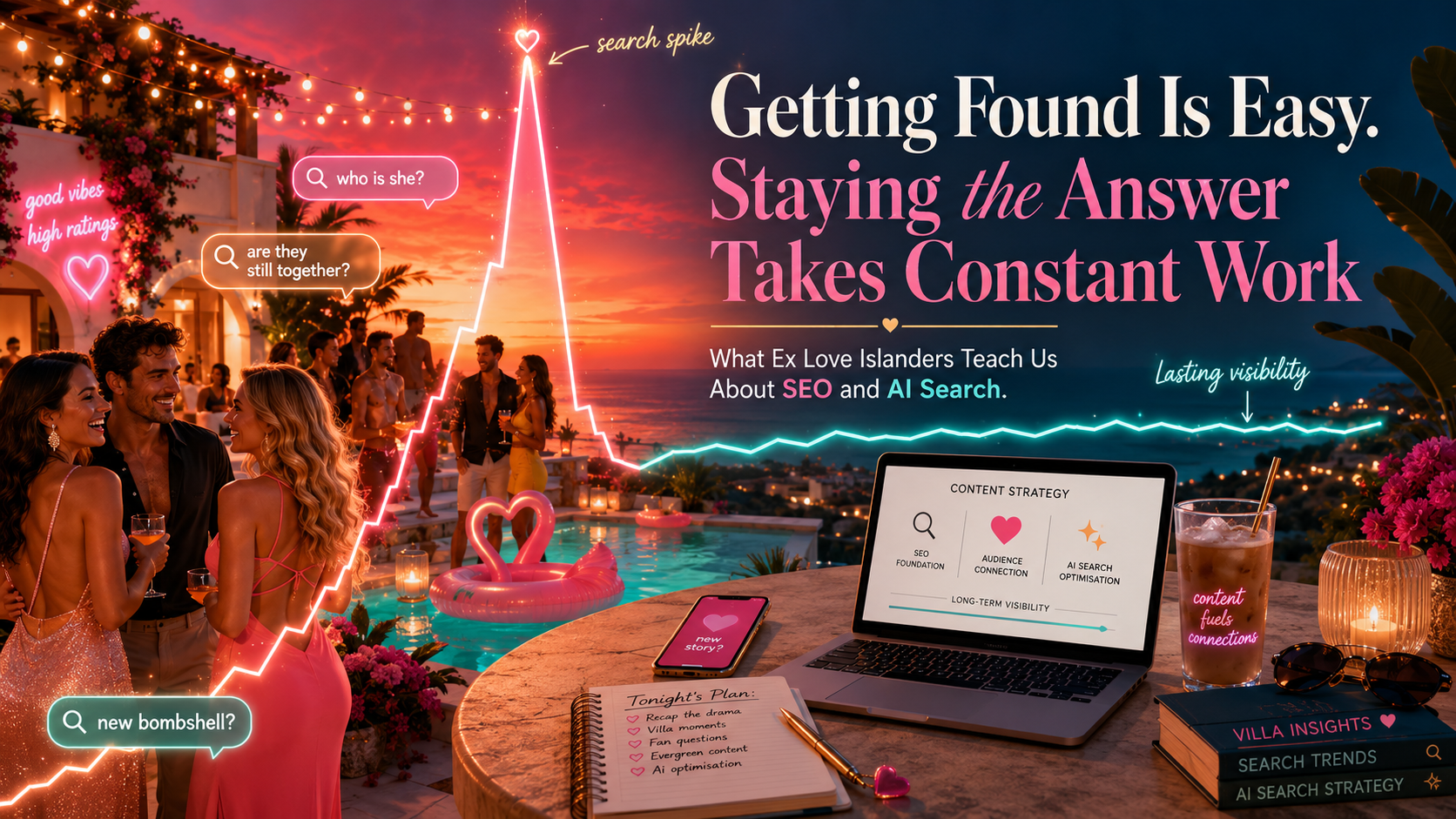 SEO Hot Takes
What Ex Love Islanders Teach Us About Staying Relevant In Search
The Love Island villa hands every Islander a search spike for free. What they do with it decides whether they end up as the next Molly-Mae or forgotten by October. Keep reading to see who I'm backing to win off the back of the 2026 series & 3 things your brand needs to do to stay visible & relevant.
Jul 21, 2026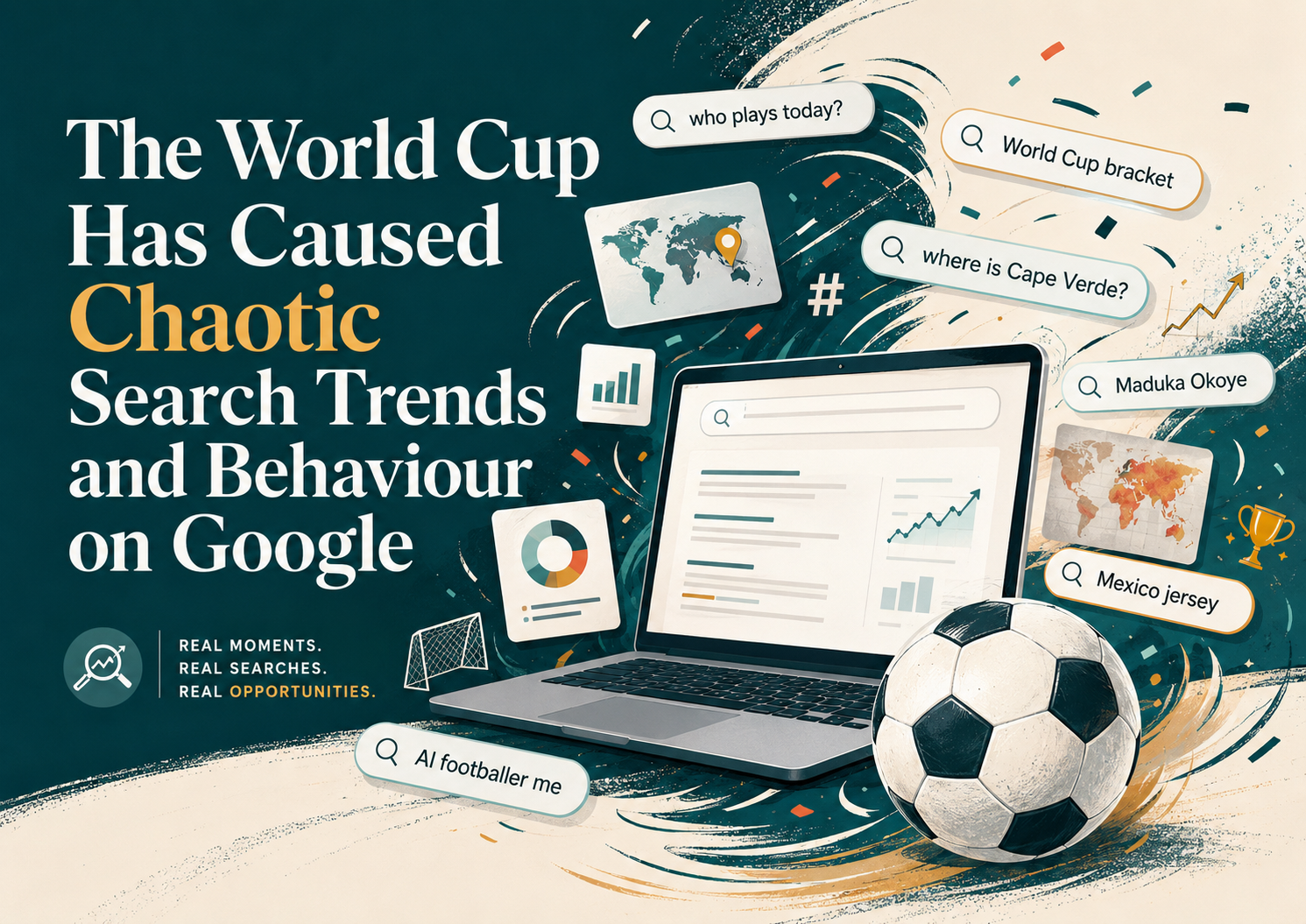 SEO Hot Takes
The World Cup Has Caused Chaotic Search Trends and Behaviour on Google
The FIFA World Cup 2026 is showing us exactly how people search when they are excited, confused, late to the conversation or desperately trying to sound informed in the group chat.
Jun 29, 2026 SEO Hot Takes
Is SEO Dead? No & Here's Why It's More Valuable Than Ever
SEO is not dead, but the old way of doing SEO is no longer enough. Here’s why search has expanded across Google, AI, YouTube, social and community platforms, and what brands need to do to stay visible, trusted and chosen.
Jun 10, 2026